On a hushed night in the year 2060, when the city outside appeared calm but history still murmured beneath the silence, a grandmother sat beside her granddaughter’s bed. The child had grown fond of stories that were neither fairy tales nor myths, but reflections of a troubled past—stories meant to sharpen conscience rather than merely entertain. The lights were dimmed, shadows rested on the walls, and the grandmother began.
“Once upon a time,” she said softly, “there ruled a man who stood at the helm of a powerful country. He was eloquent, theatrical, and acutely aware of the power of perception. He rarely relied on a single identity. Instead, he adopted different names, titles, and pseudonyms—each suited to the audience before him. In one place he was hailed as a peacemaker, in another as a global guardian. His real name has faded, but his conduct remains unforgettable.”
In the early years, she explained, his reputation was carefully cultivated. Wherever conflict brewed, he appeared—at conferences, summits, emergency visits—claiming credit for preventing wars that, according to him, would have otherwise turned into great disasters. He would stand before applauding crowds and say that his intervention alone had saved regions from catastrophe. Hosts welcomed him warmly, media celebrated him generously, and admirers praised his courage in “stopping wars before they began.”
For a time, the world believed him.
“He spoke often of reconciliation,” the mother said, “and quoted laws and treaties as if they were sacred vows. He warned others against recklessness and preached restraint. People trusted him because they wanted peace, and because confidence, once projected convincingly, can feel like truth.”
But his character, she continued, was never rooted in principle.
Gradually, almost imperceptibly, his stance began to shift. The same man who once condemned interference now found reasons to intrude. His thinking, once wrapped in the language of diplomacy, turned sharply—almost overnight—by a full one hundred and eighty degrees. What had once been restraint became impatience; what had once been mediation became domination.
“He developed a habit,” the mother said, “of interfering where he was neither invited nor needed.”
Each day brought a new position. One morning he would praise dialogue, by evening he would dismiss it as weakness. One day treaties were binding; the next day they were obsolete. His words no longer anchored his actions. Allies struggled to understand him, adversaries learned to fear him, and smaller nations grew anxious, never knowing which version of him would appear tomorrow.
To many observers, his behavior began to resemble a familiar figure from everyday life—like the stereotypical ‘Massi’ of the neighborhood, the woman who inserted herself into every household dispute, every street quarrel, every private matter, convinced that no affair could proceed without her involvement. What once seemed concern slowly revealed itself as control. What once appeared helpful turned into habitual intrusion.
“He interfered everywhere,” the mother said quietly, “not to solve problems, but to assert presence.”
As the global mood darkened, so did his conduct. The belief that “might is right” gained currency in many corridors of power, and he embraced it eagerly. Law, he argued, was useful only when it served strength. Treaties were tools, not obligations. Morality became flexible, adjusted daily to suit advantage.
Then came the night that stripped away all remaining illusions.
Under the cover of darkness, he ordered an operation beyond his borders. Armed men entered another land and seized its rulers from their own home—without trial, without legal process, without international consent. When the world reacted in shock, he appeared unmoved. Adopting yet another title, he justified the act as necessary for global stability.
“He spoke,” the mother said, “as though power itself had replaced law.”
The room felt heavier.
“He did not stop there,” the mother said. “Once he crossed that line, others vanished. He threatened more nations, and treated war like a strategy game. He no longer cared about rules—only outcomes. Treaties became scraps of paper. Law became something for others to obey.”
“Did people stop him?” the granddaughter asked.
“Some tried,” the mother replied, brushing her daughter’s hair. “But many applauded him. They called him strong. They confused force with courage and speed with wisdom. And so, fear spread, conflicts multiplied, and the world paid a price that took decades to heal.”
From that moment onward, his transformations accelerated. His positions shifted daily, sometimes hourly. He spoke of peace while preparing war, invoked morality while violating every norm he once defended. Soon, his rhetoric turned toward an ancient country—first cautiously, then aggressively, and finally with open menace.
No treaty restrained him now. No institution commanded his respect. Critics were mocked, allies confused, and supporters applauded what they mistook for decisiveness. In reality, it was unpredictability elevated to doctrine.
“He ruled,” the mother said, “without trust—and a leader without trust is more dangerous than an open enemy.”
The daughter turned her face toward her mother. “Did he succeed?” she asked.
The mother shook her head slowly. “Power gained without principle never succeeds. His rule left the world more unstable, alliances weaker, and conflicts deeper. Even after he faded from the stage, the damage he caused took years—sometimes decades—to heal.”
She leaned closer and whispered, “That is why I tell you this story. Remember; a leader who changes principles day by day cannot be trusted. When interference becomes habit, peace becomes performance. And when ‘might is right’ replaces justice, the world loses its moral compass.”
She kissed her granddaughter’s forehead and turned off the light.
As the child drifted into sleep, the lesson lingered in the quiet room—a reminder passed from one generation to the next; that peace is proven by restraint, not slogans; that power without law breeds chaos; and that history never forgets those who wore the mask of peace while practicing the language of force.
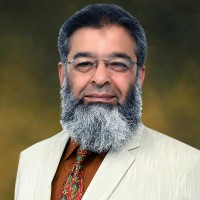
Director General National Assembly Parliament House Islamabad.