Marrakech, April 11, 2026 – The Europe Today: Spain and Morocco have taken a significant step toward realizing a long-envisioned submarine tunnel linking Europe and Africa, signing a memorandum of understanding (MoU) to advance scientific and technical studies for the ambitious project.
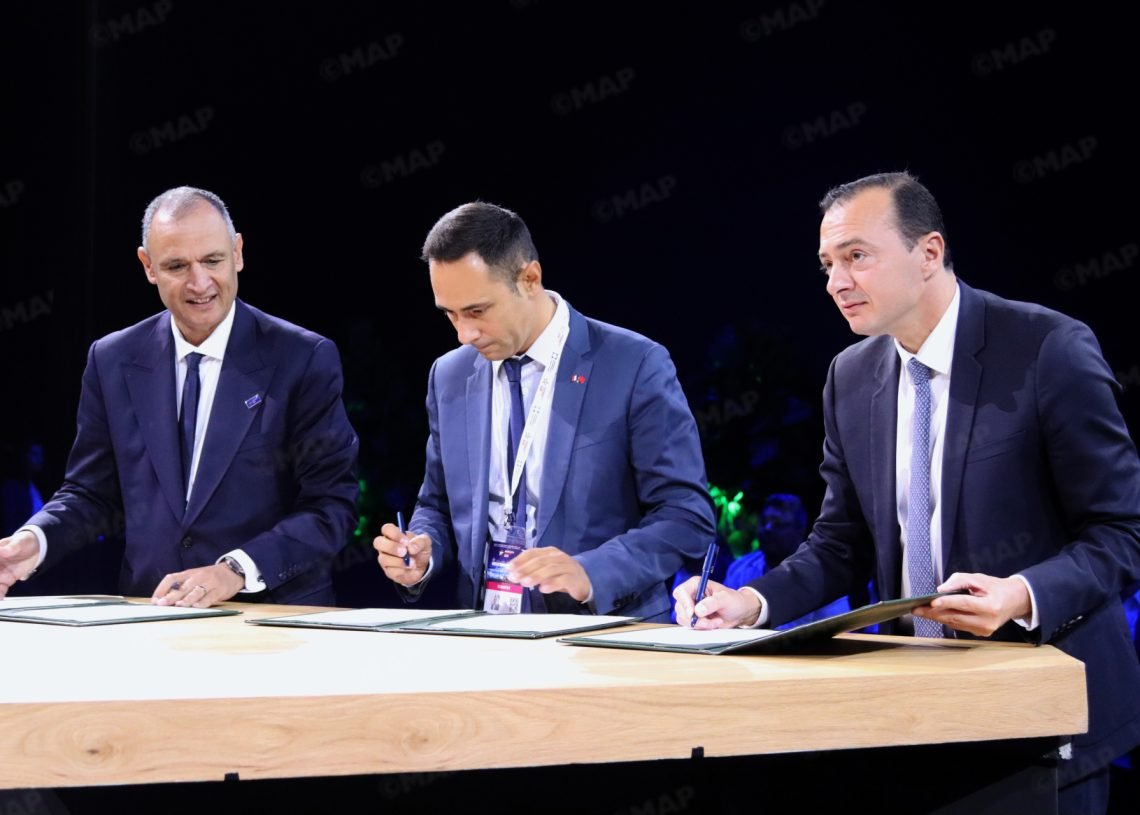
The agreement was concluded between Spain’s National Geographic Institute and Morocco’s National Center for Scientific and Technical Research to jointly examine seismic activity and geodynamic conditions in the Strait of Gibraltar—a critical step toward assessing the feasibility of the tunnel.
The MoU was formalized during a meeting on December 4, 2025, at La Moncloa between Spanish Transport Minister Óscar Puente and his Moroccan counterpart Karim Zidane. The project itself dates back nearly 50 years, reflecting a longstanding vision of establishing a fixed transport link between the two continents.
In a further boost, the Spanish government approved €1.73 million in March 2026 to finance ongoing technical studies. The initiative is being spearheaded by SECEGSA, a public entity established in the 1980s to advance the project.
Project Design and Technical Scope
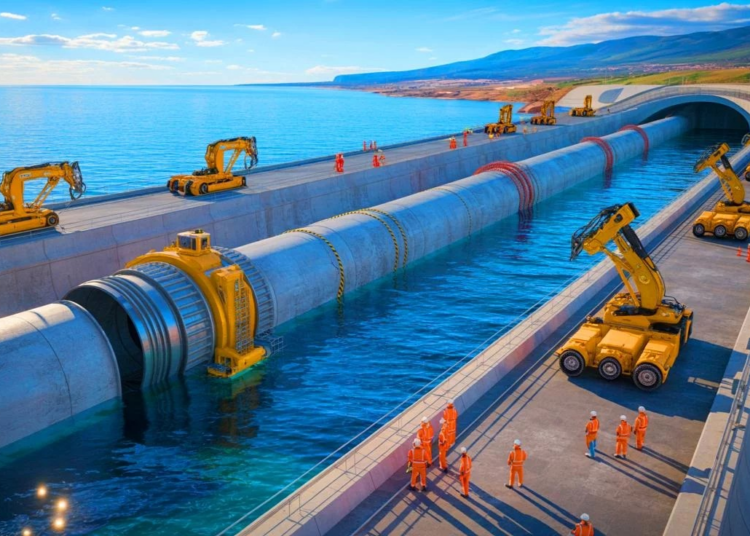
The proposed tunnel would extend approximately 65 kilometers, with about 40 kilometers located within Spanish territory. The northern access point is planned near Vejer de la Frontera, while the distance between terminal stations would be 42 kilometers.
The infrastructure will consist of two independent single-track railway tunnels, each with a diameter of 7.90 meters, alongside a central service gallery measuring 6 meters in diameter. Cross-passages will connect the tunnels every 340 meters to enhance safety and operational efficiency.
A key challenge lies in tunneling through the Umbral de Camarinal, an underwater ridge separating the Mediterranean Sea from the Atlantic Ocean. A feasibility study conducted by Herrenknecht Ibérica concluded that construction is technically viable within current engineering capabilities, though it warned of substantial logistical and financial challenges.
Geological and Environmental Considerations
The region’s subsurface is composed of complex Flysch formations—alternating layers of sandstone and clay—overlain by younger geological deposits. This variability poses significant engineering difficulties, particularly in maintaining tunnel stability across uneven strata.
To address these challenges, a comprehensive three-year study will assess seismic risks, including earthquakes and tsunamis, given that the Iberian Peninsula lies along a major tectonic boundary associated with the Azores-Gibraltar-Tunis fault system.
A marine research campaign scheduled for early 2026 will involve advanced seabed mapping, sediment sampling, and laboratory analysis. The initiative will be led by Spain’s scientific institutions, including the Institute of Marine Sciences and the Spanish Institute of Oceanography, with support from international partners such as the United States Geological Survey.
Environmental considerations are also central, as over 100,000 vessels pass through the strait annually, and the area is designated a Special Conservation Zone with rich biodiversity, including more than 1,900 marine species.
Cost, Timeline, and Strategic Impact
The estimated cost of the Spanish segment alone exceeds €8.5 billion. If completed, the tunnel would enable travel between Spain and Morocco in approximately 30 minutes, transforming connectivity between Europe and Africa.
Construction could begin with a reconnaissance gallery as early as 2027, pending favorable study outcomes, with full completion projected between 2035 and 2040.
The project, if realized, would mark one of the most ambitious infrastructure undertakings in modern history, significantly enhancing trade, mobility, and regional integration between the two continents.