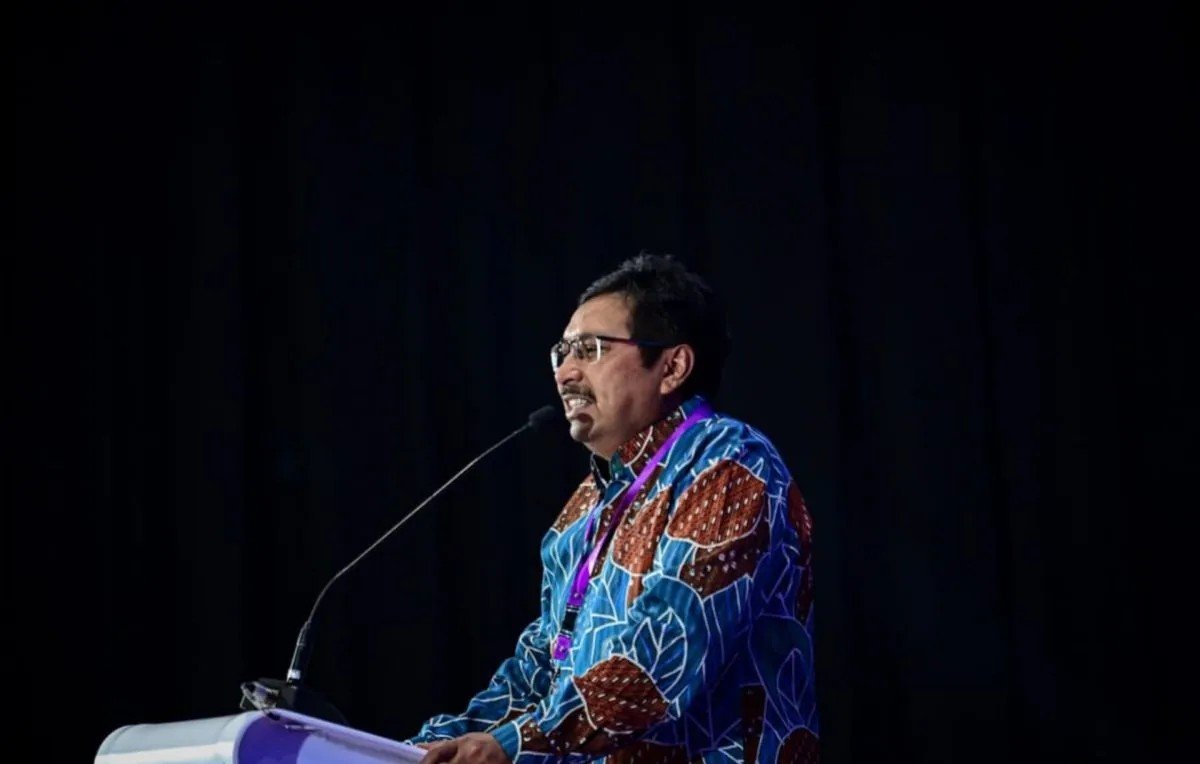
Jakarta, August 7, 2026 – The Europe Today: Indonesia’s Ministry of Communication and Digital Affairs has set a target of achieving nationwide 5G coverage by 2029, as the government seeks to strengthen the digital infrastructure needed to support an artificial intelligence (AI)-driven economy.
Ministry Secretary General Ismail said accelerating the country’s 5G development roadmap was essential to keeping Indonesia aligned with rapid global technological advances.
“We must accelerate the 5G roadmap. We hope that by 2029, 5G coverage in Indonesia will continue to expand, reaching even the most remote corners of the country,” Ismail said in a statement issued Thursday, August 6.
He emphasized that the expansion of 5G infrastructure had become increasingly important as economies worldwide move toward greater adoption of AI technologies.
“This is crucial because the world is moving toward an AI-based economy, so digital infrastructure must be able to keep pace with these needs,” he added.
Ismail said the rapid development of AI was reshaping Indonesia’s approach to telecommunications infrastructure, with digital networks no longer regarded solely as communication channels but increasingly as essential foundations for productivity, innovation and national competitiveness.
Indonesia already has a fiber-optic backbone extending more than one million kilometers, including submarine cable networks linking islands across the country. Future infrastructure development will focus on enhancing network capacity, signal quality and operational resilience to accommodate increasingly demanding digital services.
“Our challenge is no longer simply expanding the basic network. What we are building now is infrastructure capable of supporting the growth of an AI-based digital economy,” Ismail said.
The transformation is also prompting telecommunications operators to expand beyond traditional bandwidth services and develop solutions involving AI cloud integration, high-performance computing and Internet of Things (IoT) applications.
“Operators used to sell bandwidth. Now, infrastructure must be able to support AI cloud services and various productive applications that provide added value to society and industry,” Ismail explained.
To accelerate investment in digital infrastructure, the Indonesian government is introducing incentives, including auctions for the 700 MHz and 2.6 GHz radio-frequency spectrums under more affordable cost structures.
“The government must be present to provide space for digital infrastructure investment to grow more rapidly,” Ismail said.
Alongside more affordable spectrum allocations, the ministry is also developing regulatory frameworks aimed at encouraging long-term private-sector investment in strategic economic sectors, including agriculture, mining, manufacturing, healthcare, education and finance.
The government views expanded 5G connectivity as a key component of Indonesia’s broader digital transformation strategy, particularly as demand for AI-enabled services and high-capacity digital applications continues to grow.