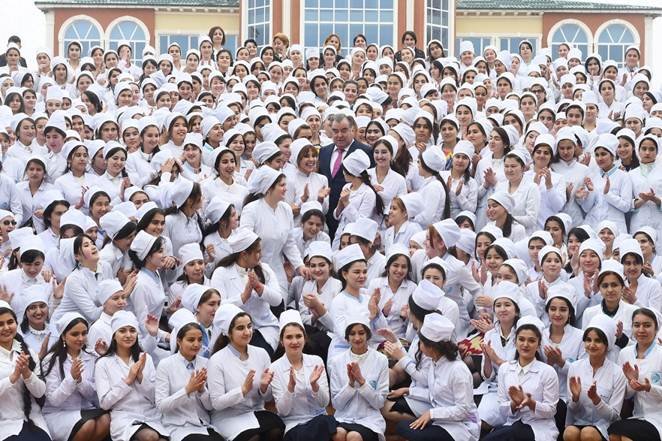
Dushanbe, August 18, 2026 — The Europe Today: Tajikistan marked Healthcare Workers’ Day on Tuesday with a wreath-laying ceremony at the monument to renowned Tajik scholar, philosopher and physician Abu Ali ibn Sina in the capital, Dushanbe.
Healthcare Workers’ Day is observed annually in Tajikistan on August 18. The date was officially included in the country’s list of state holidays by the Parliament of Tajikistan on August 18, 1995, in honour of the birth anniversary of Abu Ali ibn Sina, one of the most prominent scholars and physicians of the medieval Islamic world.
Various conferences, commemorative events and professional gatherings are held across Tajikistan every year to mark the occasion and honour Ibn Sina’s scientific and medical legacy.
The Government of Tajikistan continues to place particular emphasis on the development of the healthcare sector and on improving the material and professional conditions of medical workers, recognizing health as a fundamental basis for the well-being of individuals, families and society.
President of Tajikistan Emomali Rahmon has repeatedly emphasized that the health of society represents a key national asset.
Minister of Health and Social Protection of the Population Jamoliddin Abdullozoda said that during the years of independence, presidential initiatives had contributed to strengthening the legal framework of the healthcare sector, improving management and financing systems, constructing medical facilities, introducing modern equipment and expanding diagnostic and treatment capabilities.
According to the minister, the number of healthcare institutions in Tajikistan has increased from 2,860 before independence to 5,313 at present. During the independence period, 3,265 healthcare facilities have been constructed, renovated and commissioned.
More than 2.353 billion somoni has also been allocated over the 35 years of state independence for the procurement of medical equipment, devices, supplies and sanitary transport.
The minister highlighted the introduction of modern diagnostic and treatment technologies as one of the major achievements of the healthcare sector during the independence period. More than 49 new diagnostic methods and 222 treatment methods have been introduced in medical institutions across the country.
These measures are aimed at improving public health and raising the quality and accessibility of medical services.
This year, healthcare institutions throughout Tajikistan are holding meetings, conferences and commemorative events to mark Healthcare Workers’ Day, with outstanding medical professionals being recognized with awards and certificates of appreciation.
The medical profession is widely regarded as one of the most honourable and respected professions because of its direct responsibility for protecting human life and health. The annual observance of Healthcare Workers’ Day also serves as an occasion to recognize the dedication and service of doctors, nurses and other healthcare professionals across Tajikistan.