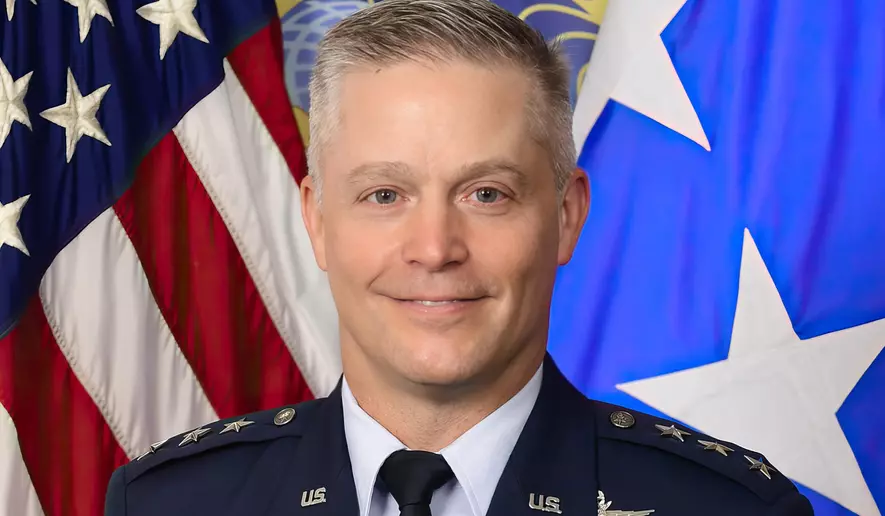
Washington, April 4, 2025 – The Europe Today: In a sweeping and unexpected reshuffle of the U.S. intelligence and defense leadership, the Trump administration has dismissed General Timothy Haugh, Director of the National Security Agency (NSA) and head of U.S. Cyber Command, along with his deputy, Wendy Noble. The decision, confirmed by members of the Senate and House intelligence committees and two former officials, marks one of the most significant leadership upheavals in the early months of President Trump’s return to office.
General Haugh, who assumed his dual role in February 2024, oversaw the NSA—America’s preeminent signals intelligence agency—and U.S. Cyber Command, the military’s central body for conducting cyber operations. The dismissal of both Haugh and Noble has raised serious concerns among lawmakers and national security experts about the continuity and stability of U.S. intelligence operations.
Senator Mark Warner, Chair of the Senate Intelligence Committee, and Representative Jim Himes, the top Democrat on the House Intelligence Committee, issued sharp rebukes late Thursday, denouncing the removal as reckless and destabilizing. “Firing Gen. Haugh at such a critical time, with no public explanation, raises serious questions about political interference in our national security institutions,” Warner stated.
No official reason has been given for the dismissals. Lt. Gen. William Hartman, currently serving as the deputy commander of Cyber Command, is expected to assume leadership of both the NSA and Cyber Command on an interim basis, according to sources familiar with the matter.
The firings come in the wake of a separate purge within the National Security Council, reportedly following a meeting in which far-right activist Laura Loomer urged President Trump to remove staff she characterized as disloyal. Whether the incidents are connected remains unclear.
Both the NSA and Cyber Command declined to comment, referring inquiries to the Office of the Secretary of Defense, which was not immediately available. The White House National Security Council also did not respond to requests for comment.
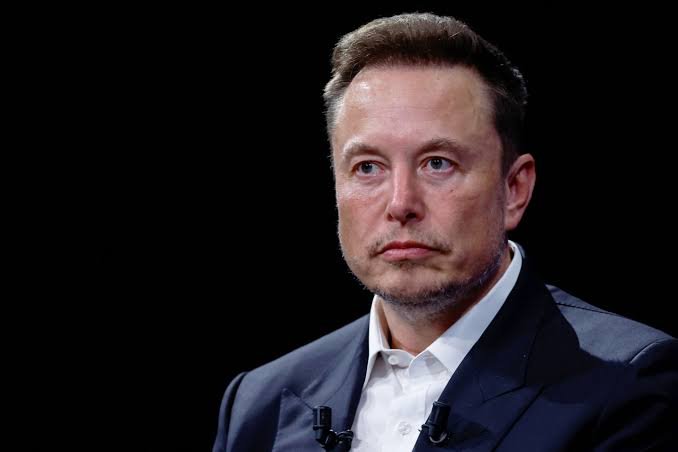
The developments follow a recent high-profile visit by Elon Musk—now overseeing the Department of Government Efficiency—to NSA and Cyber Command headquarters in Fort Meade, Maryland, hosted by Haugh just weeks before his dismissal.
Current and former officials have expressed growing concern over what some describe as a “climate of fear” within the Department of Defense, where perceived disloyalty to the administration may now be grounds for dismissal.
General Haugh had recently testified before the House Intelligence Committee regarding secure communications, amid a scandal involving a Signal messaging group chat that included Defense Secretary Pete Hegseth and other top officials discussing sensitive operations—unknowingly in the presence of a journalist. Haugh was not involved in the chat but cautioned about the potential risks of such communication platforms.
The NSA plays a central role in global intelligence gathering, cryptographic operations, and cybersecurity. U.S. Cyber Command, established in 2009, has emerged as a key player in defending against foreign cyber threats, notably disrupting a Russian troll farm during the 2018 elections and countering Iranian hackers during the 2020 campaign.
Renée Burton, a veteran cybersecurity expert and former senior NSA official, described the dismissals as “alarming.”
“General Haugh and Ms. Noble brought critical experience and continuity to one of our most vital national security missions,” Burton told CNN. “Their abrupt removal introduces uncertainty and risk at a time when global cyber threats are escalating.”
The firings follow an unprecedented purge of senior military leadership in February, during which President Trump also dismissed the Chairman of the Joint Chiefs of Staff, closely followed by the removal of the Navy’s top officer and the Air Force’s vice chief.
As the intelligence community reels from the latest upheaval, questions continue to mount over the politicization of national security leadership and the potential implications for the country’s cyber defense posture.