Hanoi, August 03, 2026 – The Europe Today: The EU-Vietnam Free Trade Agreement (EVFTA) has significantly transformed economic relations between Vietnam and the European Union over the past six years, driving strong growth in bilateral trade, boosting investor confidence, and reinforcing Vietnam’s position in global value chains, according to recent assessments.
Marking six years since the agreement came into force on August 1, 2020, experts say the landmark trade pact has converted longstanding political cooperation into deeper commercial integration, creating new opportunities for businesses on both sides.
The agreement has facilitated the gradual elimination of tariffs, reduced regulatory barriers, enhanced market access, and encouraged higher standards in trade and investment. It has also strengthened business confidence while helping Vietnamese exporters expand their presence in one of the world’s most demanding markets.
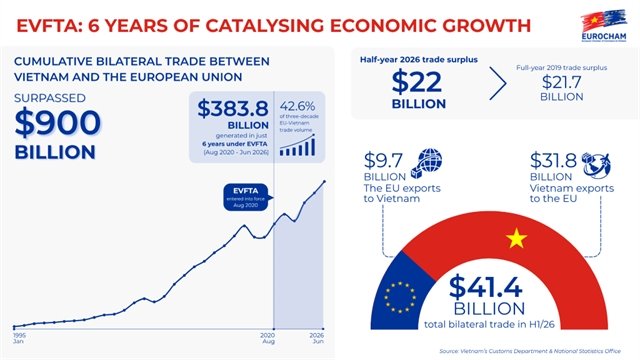
According to recent reports, bilateral trade has grown substantially since the EVFTA entered into force. In the first half of 2026, two-way trade between Vietnam and the EU reached approximately US$41.4 billion, including US$31.8 billion in Vietnamese exports and US$9.7 billion in imports from the EU. Over the six-year period, the agreement has contributed significantly to sustained annual trade growth and deeper economic integration.
The EVFTA has also supported Vietnam’s efforts to attract higher-quality foreign investment, particularly in high-technology industries, renewable energy, green manufacturing, and sustainable development. In addition, the agreement has encouraged reforms in areas such as intellectual property protection, labour standards, environmental governance, and regulatory transparency.
Business leaders and trade experts believe the EVFTA will continue to serve as a strategic pillar of Vietnam-EU economic cooperation, with both sides expected to deepen collaboration in innovation, digital transformation, sustainable trade, and resilient supply chains in the years ahead.