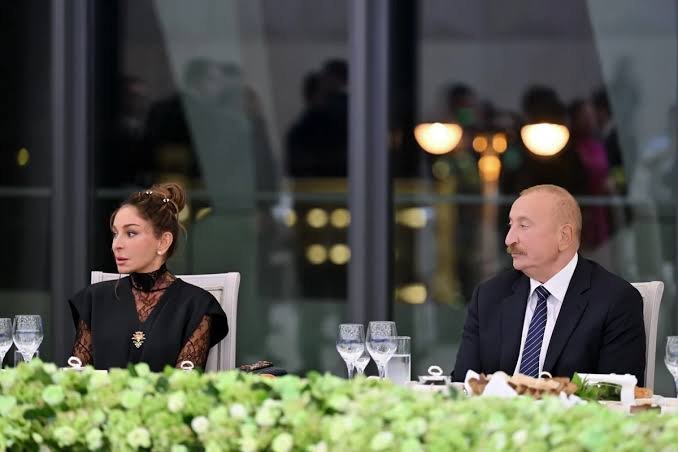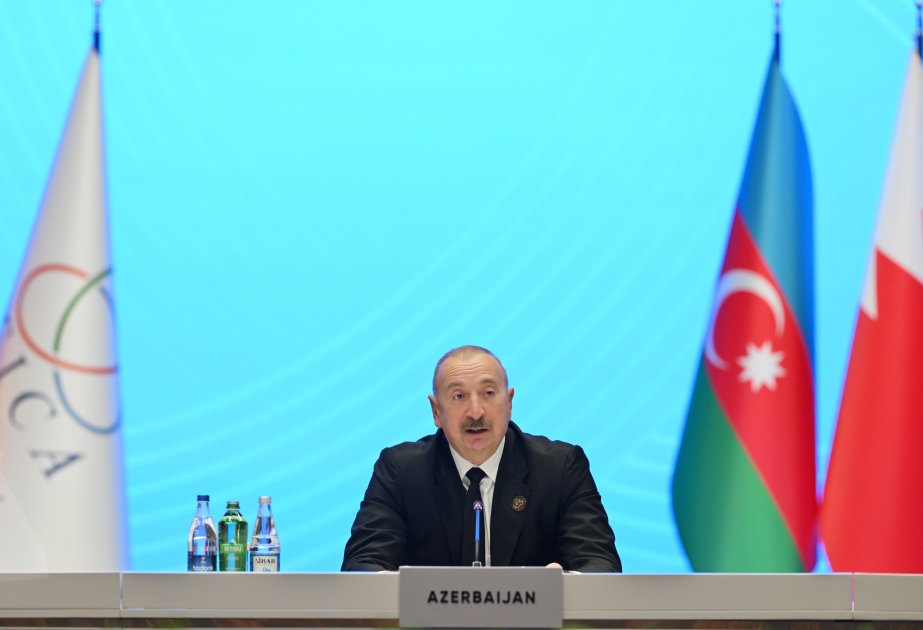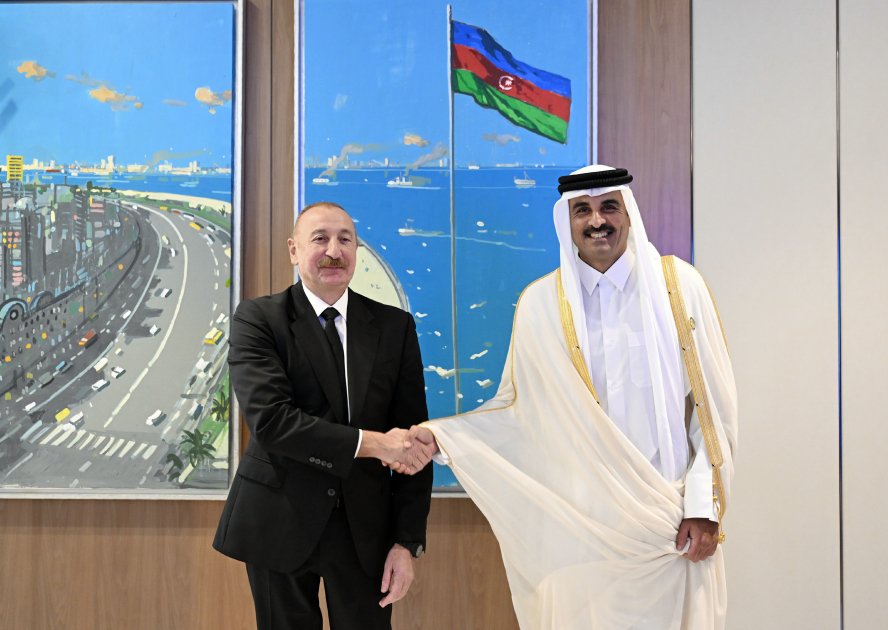
Azerbaijan is making a statement as leaders and senior officials from around the Asian continent converge in Baku for the seventh summit of the Conference on Interaction and Confidence Building Measures in Asia (CICA), reflecting the increasing influence of its diplomacy. President Ilham Aliyev’s meetings leading up to the summit demonstrate Baku’s resolve to expand cooperation, enhance its role in Central Asia and position itself as a solid basis for dialogue in a region defined by conflicting geopolitical interests.
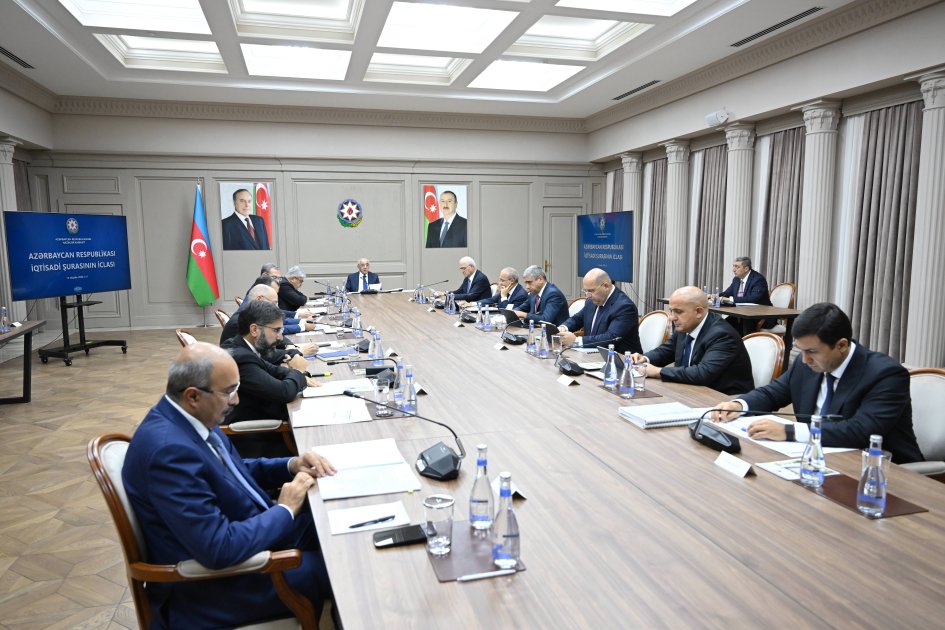
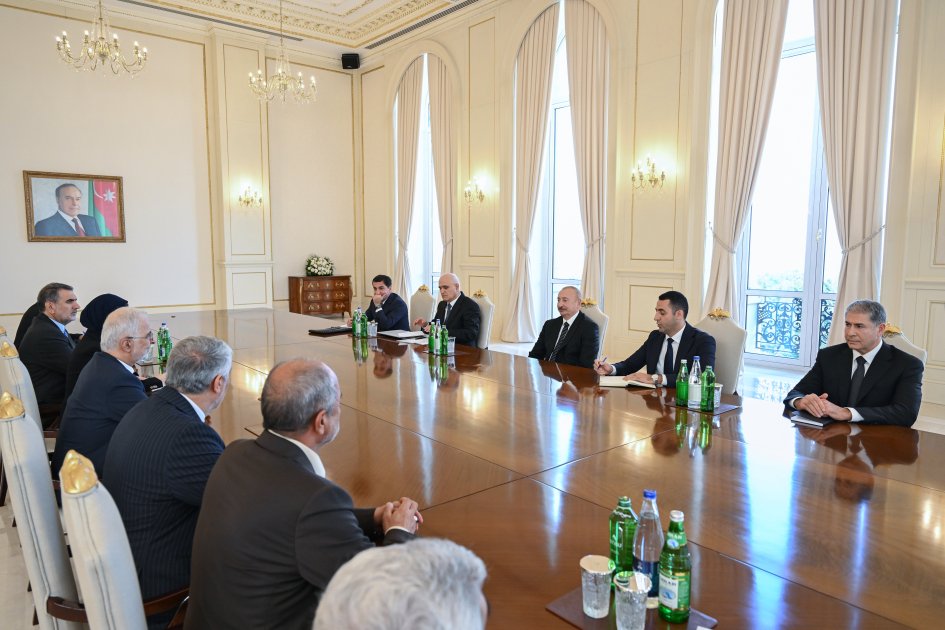
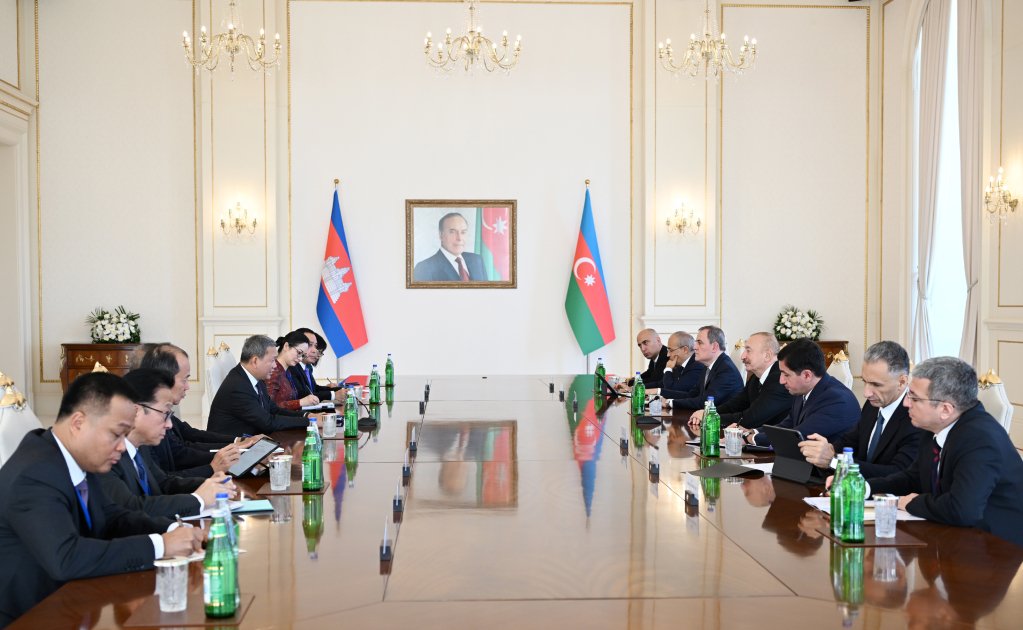
This is well demonstrated by President Aliyev’s hectic bilateral agenda. His meetings with the Chinese Foreign Minister Wang Yi, Tajik President Emomali Rahmon and Vietnamese Vice-President Vo Thi Anh Xuan, as well as with other visiting delegations, reflect Azerbaijan’s extensive diplomatic relations. In addition, Uzbekistan’s President, Shavkat Mirziyoyev, and high-ranking officials have made several visits to Baku, making the city a hotspot for diplomacy.
It is not so much the amount of dignitaries as the diversity of interests they represent that is significant. Azeri initiative to host representatives from countries such as these enables Azerbaijan to foster dialogue and ensure concrete cooperation while the countries do not have to include its agenda in their foreign policy priorities. This is effective, quiet diplomacy.
During Aliyev’s meeting with Wang Yi had a special economic flavor. The sides highlighted the strengthening of strategic partnership between Azerbaijan and China and the Chinese foreign minister acknowledged the important role Azerbaijan plays along the Middle Corridor. President Aliyev, in turn, noted that there are practical possibilities for cooperation in the transport and renewable energy sectors.
These dialogues hint at a more strategic consideration. Geography is not the only reason why Azerbaijan is important. It is based on the country’s proven track record in linking political ties to the transport sector, energy cooperation and international markets. In response to the diversification of trade routes, the Middle Corridor, which connects China and Central Asia via the Caspian Sea and through the South Caucasus to Türkiye and Europe has come to the fore. Azerbaijan has key hubs such as its ports, railways and links with Georgia and Türkiye, which make it a key nexus in this network, especially for Central Asian nations who want a more direct route to the markets to the West.
Better mutual cooperation between Baku and Tashkent can help to deepen the cooperation in the transport sphere, increase trade and open up new opportunities for mutual investment. Azerbaijan’s relations with Tajikistan and other Central Asian countries also enhance its role in a broader regional network. The relations are becoming more important as Central Asian countries are looking to expand their international relations and create alternative export routes.
Azerbaijan already plays a crucial role in providing energy for Europe and is an essential transit route between Central Asia and the European market and an active member of regional connectivity talks. Through the region, economic incentives for cooperation might arise due to the development of transport links. However, the political animosity and unsettled security forces issues are impediments—and that’s where Azerbaijan’s peacebuilding agenda comes in. Maintaining normal relations with Armenia is still key to a more stable South Caucasus. In the case of sustainable peace, transport links would be opened, regional trade increased and strategic costs of confrontation minimized. This broader goal can be achieved with Azerbaijan’s ability to gather international partners around itself.
CICA offers a conducive forum for this aspirations. It is focused on issues of confidence building, transport connectivity, digitalisation and sustainable development. The chairmanship of Azerbaijan has aimed to promote concrete cooperation and support efforts to deepen the institutional framework of the organisation. The extension of the Azerbaijan chairmanship for another two years is a testament to Baku’s care.
But what happens after the meetings will be the basis for measuring the summit’s legacy. It is not enough for diplomatic visibility to generate investment, functioning transport corridors or long-term peace. These demand continued negotiation, parallel infrastructure development and commitment. Now, the challenge is to make sure that the peace that is to be a result of decades of fighting is a lasting peace.
In his speech to the summit, President Aliyev put the new and deeper yet discomforting question at the heart of international politics: What if the rules that are supposed to govern relations between states are disregarded, and the institutions that are supposed to enforce those rules do nothing? While Azerbaijan’s conflict with Armenia was the subject of much of his talk, his argument much broader than just the South Caucasus. It was a discussion on the authority of international law, the nature of its failure, and the factors that would make peace possible.
The President’s main argument was simple: international organisations can’t say they are protecting a rules-based order when they make rules which they don’t enforce for decades. The impact of Karabakh conflict has left its mark on the national security, foreign policy and relations with international institutions in a country which regained independence in 1991.
About 20 percent of the internationally recognised territory of Azerbaijan was under occupation for nearly three decades and hundreds of thousands of Azerbaijanis were forced to flee. He said that the international response was inadequate to the problem.
The most significant was the United Nations Security Council. Four resolutions for withdrawal of occupying forces from Azerbaijani territories were adopted in 1993. For decades, those resolutions were never put into practice. President Aliyev’s anger was about more than a historical offense, it was a structural problem in the international system: between saying a principle and living by it.
What is the significance of international resolutions if they are not followed consistently, but by politics? International law is generally touted as the basis of a peaceful global system. But its legal standing is not solely on the basis of the principles that have been incorporated into treaties and resolutions, it is also dependent on state and institutional preparedness to take action when those principles are being breached.
President Aliyev pointed out that the UN had adopted a series of resolutions, the diplomatic process had been ongoing and the OSCE Minsk Group had been formed to look for a solution. However, according to Azerbaijan, this did not lead to a long-term solution. The Minsk Group was singled out for its failure to bring peace or a solution to the conflict.
An important difference between recognizing the shortcomings of international institutions and deciding that force is the only solution. International institutions work in a political landscape with variegated interests and enforcement powers can be limited. It’s not as easy to reform that system as it is to highlight its flaws. However, the question that President Aliyev asked is important. If states find that international institutions are incapable of safeguarding their territory and enforcing their decisions in their name, it will surely make them less confident in the multilateral diplomacy approach.
The President claimed in 2020 that Azerbaijan’s military victory in the conflict was a restoration of sovereignty and territorial integrity after decades of unresolved conflict and failed negotiations, and that this had been completed in 2023.
His narrative singles out the occupying party and actors he feels were responsible for maintaining the status quo, internationalists. A full historical analysis should also take into account rival accounts and the shared anguishes of everyone involved. That is not the most significant part of the President Aliyev’s argument: the Azerbaijani’s victory in the war. Rather, if a diplomatic process fails to resolve the core issue, it can lead to a spiral of crisis and escalation that impacts upon the parties well beyond the negotiating table. It’s an alarming message international institutions should heed. Peace does not follow in the wake of victory.
President Aliyev’s most politically impactful moment was when he shifted his focus from war to what would happen after. He emphasized that Azerbaijan was not looking for revenge. Instead, after restoring its territorial integrity, Baku had offered peace. The diplomatic message of this event is primarily about the military victory: it is not an end to itself, but a beginning to a new relationship with the neighbouring country.
Peace is a harder thing to achieve than victory, however. A military solution does not necessarily result in a political solution, and historians’ grievances can be addressed without gaining control of the territory and without eradicating the political motivations to fight again. This will take political will on all parts.
President Aliyev also underlined Azerbaijan’s role in international system. The country is a bridge between Europe and Asia, and is increasingly seen as a transportation hub, as well as a source of energy, trade and political dialogue. He connected this role with Azerbaijanis’ independent foreign policy, which is based on the principle of sovereign equality, non-interference in the internal affairs of the other countries, and respect for territorial integrity. This is particularly true for a nation whose foreign policy aims to be expanded to multiple areas and who maintains relationships with some partners whose interests may not coincide.
Connectivity is not just an economic opportunity for Azerbaijan; it’s a diplomatic tool. Transport corridors can help develop interdependence in trade and provide tangible benefits for regional actors to maintain stability. But even being connected doesn’t necessarily mean you are secure. Rules that are predictable, commitments that are credible, and a political climate that is conducive to dispute resolution without resorting to conflict are the key foundations of economic cooperation.
The issue of international law as raised by the President Aliyev in his speech is connected with Azerbaijan’s wider aspirations. One of the conditions for the country to become a bridge between regions is whether those regions have a stable and predictable international environment. His talk in Baku was grounded in the national experience of Azerbaijan, but the most significant issue is what will be the future of multilateral diplomacy.
No one can stop all wars and no single resolution, mediation or summit declaration can solve all conflicts. Those institutions that consistently fail to implement their decisions into effective action risk undermining the principles that they were set up to uphold. Under President Ilham Aliyev, Azerbaijan is claiming its diplomatic influence, strategic location and ability to deliver more than ever before to secure a more legitimate and effective international system that is capable of building confidence and ensuring connectivity, while strengthened by mutually reinforcing principles. The Baku talks have paved the way. Now translation into sustainable partnerships, working corridors and lasting stability has to be started.
Owner of “The Europe Today” and Patron-In-Chief/Owner of “The Gulf Observer”, Chairman “The Gulf Observer Research Forum”, Foreign Affairs Expert, Analyst, International Award Winning Author and Poet.