Madrid, November 21, 2026 – The Europe Today: An internal Spanish government report that was never published has reopened the debate over metamizole, the active ingredient in Nolotil. The report suggests British residents in Spain faced a far higher risk of a potentially fatal blood disorder than Spaniards taking the same drug.
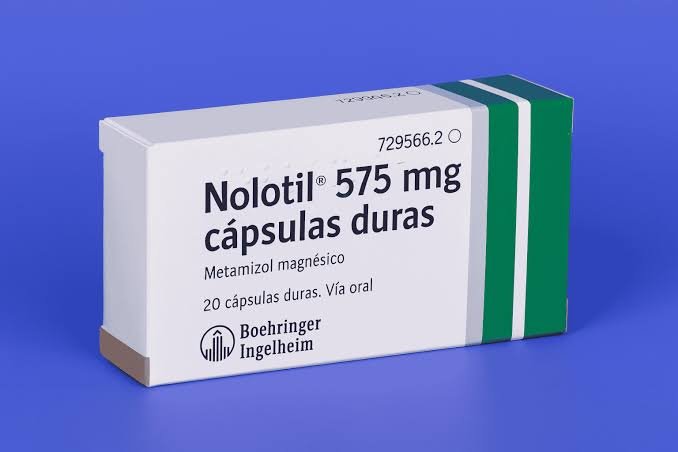
The findings were presented at the recent congress of the Spanish Society of Hospital Pharmacy (SEFH) and at the latest European congress in the field. They come from a 2019 report by the regional government of Valencia, and Spanish daily EL PAÍS has now obtained access to it. Metamizole, also known as dipyrone, is the molecule behind Nolotil, Spain’s best-selling branded medicine, which is widely prescribed for pain and high fever. In the United States, where it is sometimes called “Mexican aspirin,” the drug is banned.
Nine Deaths, Seven of Them British
The study, titled Prevalence of agranulocytosis from metamizole in European populations residing in Alicante province (2016-2017), looked at severe adverse reactions over two years in the coastal areas of Denia, Villajoyosa, Torrevieja, San Juan and Orihuela. Many foreign residents live in these areas. Together they had 916,000 registered residents at the time, including 62,000 people from the United Kingdom (6.7 percent) and 28,000 from other northern European countries.
The researchers recorded nine deaths from agranulocytosis caused by metamizole during the period. Seven of those who died were British and two were Spanish. Agranulocytosis is the drug’s best-known serious side effect. It is a sharp drop in granulocytes, a type of white blood cell, and it can be fatal, especially for elderly people and those with weakened immune systems.
In total, 41 patients were hospitalized with metamizole-related agranulocytosis: 26 British, 11 Spanish, and one each from Denmark, the Netherlands, Sweden and Morocco.
How the Metamizole Risk Was Measured
The researchers cross-checked hospital discharge records against outpatient use of the drug among people over 45 in 2016 and 2017. They then reviewed each patient’s medical file to confirm that metamizole had been taken in the month before admission. Patients whose immune suppression could have had other causes, such as infections, other medicines or cancer, were excluded.
The central finding is the gap in risk between British and Spanish patients, which the study measured in two ways. The first method found 0.33 cases per 100,000 defined daily doses among Spaniards, against 39.8 among UK nationals. That is a risk 120.7 times higher.
The second method counted cases per 1,000 patients treated. Spaniards had 0.084 cases, roughly one in every 12,000, while Britons had 6.62, about one in every 151. That is a relative risk 78.8 times higher.
A Decades-Old Controversy
Concerns about metamizole are not new. The drug was first marketed in Germany in 1922 and is still widely used there, as well as in Austria, Italy, Portugal, Russia and Turkey. Belgium and the Netherlands still approve it but tightly restrict its use. The United Kingdom, Ireland, France, Sweden, Denmark, the United States and around 30 other countries have withdrawn it because of its link to agranulocytosis.
In 2018, Spain’s Health Ministry issued a warning about misuse of metamizole after British media reported that about a dozen UK citizens had died after taking it in Spain. That year the Spanish Agency of Medicines and Medical Devices (AEMPS) acknowledged a long-running debate over whether people from northern Europe are more sensitive to the drug, but said this had not been confirmed. The agency advised against using metamizole for more than a week and recommended avoiding it in transient populations.
The study’s author, José Luis Marco Garbayo, criticized that guidance at an SEFH event. He said it targeted tourists, when the real risk lay with people from these countries who live in Spain. He declined to be interviewed by EL PAÍS.
Over the past decade, hospitals in areas with large foreign populations, such as the Costa del Sol and Denia, have repeatedly raised alarms and brought in their own safeguards. The cases have led to several lawsuits, most of which are still pending.
Regulators Push Back
The AEMPS still says the available evidence can neither confirm nor rule out a higher risk in groups with particular ethnic or genetic traits, and that the benefits of metamizole still outweigh its risks. In writing, the agency played down the Valencia report. It called the report descriptive rather than analytical and said its design and methods cannot support conclusions about incidence or relative risk.
Instead, the agency points to its own study, published in 2024 in the European Journal of Clinical Pharmacology. That study found agranulocytosis very rare, but more than four times more common with metamizole than with other painkillers. The authors noted that the small number of cases means chance cannot be ruled out. The study also did not separate patients by country of birth, so it says nothing about whether British people face a higher risk.
At European level, the European Medicines Agency (EMA) reviewed the drug’s safety in 2023 and 2024 after Finland withdrew it. The EMA concluded that its benefits still outweigh the risks, but required changes to patient leaflets to help people spot complications earlier.
Calls for Transparency
Vicente Palop, of the medication-use working group at the Spanish Society of Family and Community Medicine (semFYC), sharply criticized how the drug’s safety is being handled. He spoke of “a serious problem of transparency and reporting.” He said the real impact of the side effects is unknown, for Spaniards as well as northern Europeans. In his view, while countries like Finland act firmly, the AEMPS seems to prefer dismissing warning signs over finding out how big the problem really is.