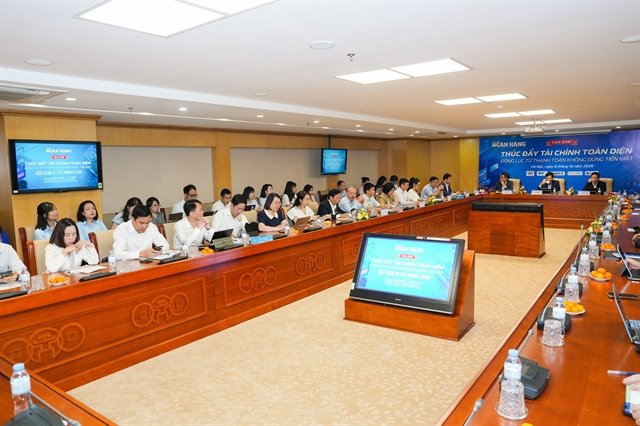
Hanoi, April 23, 2026 – The Europe Today: Prime Minister Lê Minh Hưng has emphasized the need to prioritise resources and boost spending on strategic, high-tech, and core technologies as part of Vietnam’s push to accelerate science, technology, innovation, and digital transformation.
Speaking at a working session with the Ministry of Science and Technology Vietnam on Wednesday, the Prime Minister stated that at least three percent of the total annual State budget should be allocated to these sectors, in line with the Politburo’s Resolution 57.
According to reports presented at the meeting, the ministry has played a key role in shaping the legal framework, advising the issuance of 10 laws, one resolution, 35 decrees, and 60 decisions during 2025 and the first quarter of 2026. Authorities have also identified 11 groups of strategic technologies encompassing 35 key products.
Vietnam’s science and technology landscape has shown notable progress. In 2025, the country recorded 53 scientific organisations meeting regional and international standards, alongside the establishment of six high-tech parks. High-tech exports accounted for nearly 50 percent of total exports, while Vietnam ranked 44th among 139 economies in the Global Innovation Index. Its startup ecosystem was placed 55th globally.
Digital infrastructure has also expanded rapidly. By March 2026, 5G network coverage reached 91.9 percent of the population, serving over 22.4 million subscribers. Vietnam ranked 14th worldwide in mobile internet speed and ninth in fixed broadband performance, with its IPv6 infrastructure placing seventh globally.
The digital economy continues to grow significantly, with 1,394 new digital technology enterprises established. Exports of digital technology products exceeded $45 billion, contributing to a total export turnover of approximately $172 billion. The country’s e-commerce market reached $36 billion—three times its size in 2020.
For 2026, the State budget allocated to science, technology, innovation, and digital transformation stands at VNĐ65.02 trillion ($2.47 billion), with 92.27 percent of recurrent expenditure and 68.58 percent of investment spending already disbursed.
While acknowledging progress, Prime Minister Hưng highlighted several shortcomings and called for reforms, including a shift from input-based support to outcome-driven mechanisms, improved governance, and the removal of regulatory bottlenecks through controlled risk-taking and enhanced digital asset management.
He set ambitious targets for the future, including raising the digital economy’s contribution to 30 percent of GDP and ensuring that more than 40 percent of enterprises engage in innovation activities.
The Prime Minister also directed the ministry to urgently submit three decrees and two prime ministerial decisions within April to guide the implementation of laws on digital transformation and artificial intelligence. Additional priorities include finalising the list of strategic technologies, developing funding mechanisms in coordination with the Ministry of Finance, and establishing regulatory sandbox frameworks for innovation.
By the second quarter of 2026, the ministry is tasked with drafting a resolution on a new national development model centred on science, technology, innovation, and digital transformation for submission to the Party Central Committee.
Prime Minister Hưng further called for a comprehensive restructuring of research infrastructure and the innovation ecosystem, including reforms to 16 key national laboratories, enhanced support for intellectual property valuation, and the establishment of criteria for recognising innovation centres and enterprises by May 2026.
The directives underscore Vietnam’s commitment to positioning itself as a regional leader in digital innovation and high-tech development.