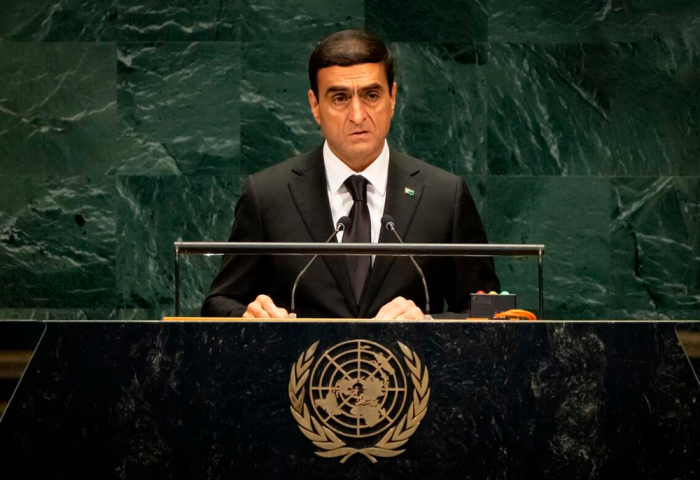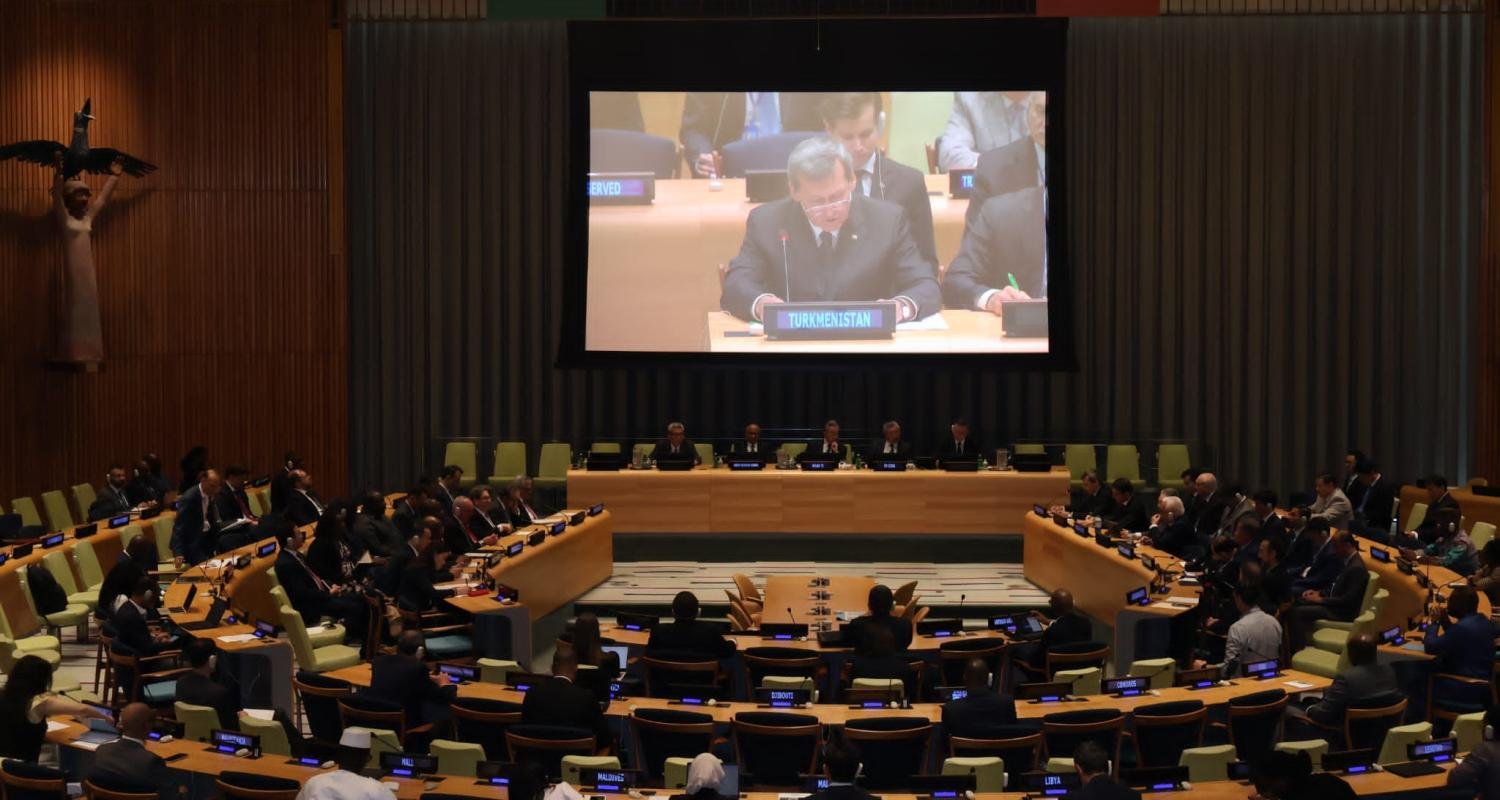
New York, May 29, 2026 – The Europe Today: The delegation of Turkmenistan, led by the Minister of Foreign Affairs, participated in the meeting of the Group of Friends of Global Governance held in New York under the theme “Reforming and Improving Global Governance, Working Together to Address Global Challenges.”
During the session, the head of the Turkmen foreign ministry expressed gratitude to Wang Yi for the invitation and reaffirmed Turkmenistan’s support for the Global Governance Initiative introduced by Xi Jinping on September 1, 2025, during the SCO Summit. He stated that Turkmenistan’s participation in the Group of Friends serves as an important platform to advance this initiative within the framework of the United Nations.
Emphasizing the importance of strengthening multilateral cooperation, the Turkmen side presented four key practical proposals aimed at improving global governance mechanisms.
The first proposal called for a shift toward preventive governance through the establishment of a Multilateral Platform for Preventive Governance, designed to enhance early warning systems and prevent the emergence of conflicts and crises.
The second initiative focused on strengthening the international legal framework, including Turkmenistan’s ongoing efforts at the United Nations to designate 2028 as the International Year of Law, intended to promote global dialogue on the role of international law amid evolving global transformations.
The third proposal addressed the issue of data reliability and digitalization, highlighting the importance of verified information in decision-making processes. Turkmenistan advocated for the development of universal principles of data reliability and joint verification mechanisms.
The fourth element underscored inclusivity and practical implementation, stressing that effective global governance must be measured by its ability to deliver tangible solutions based on trust, cooperation, and inclusiveness.
In conclusion, the Turkmen delegation emphasized that preventive governance, international law, reliable data systems, and practical implementation collectively form an integrated framework for responsible and effective international cooperation.