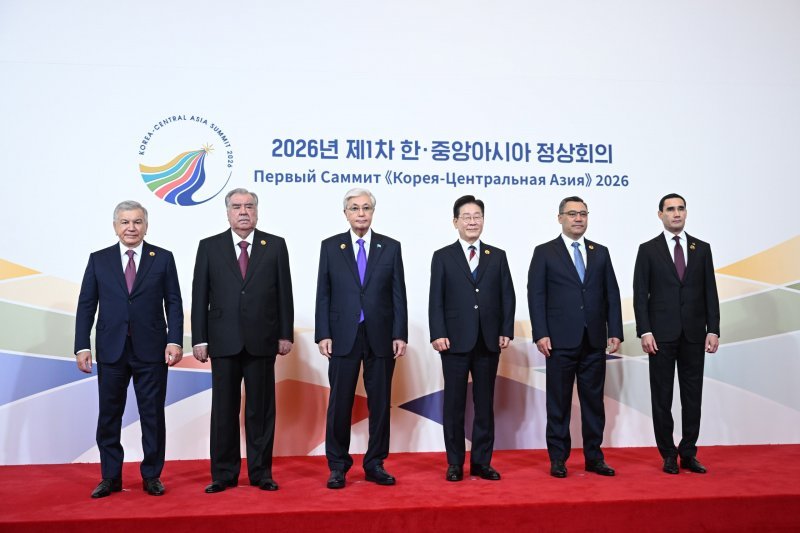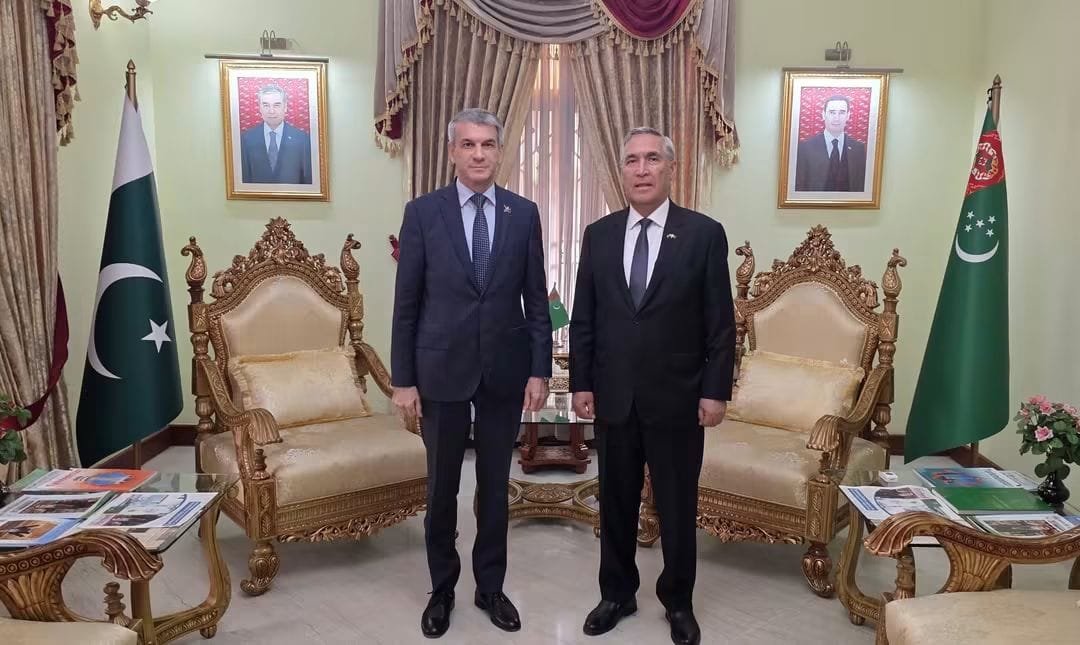
A few days ago, Xi Jinping met with the National Leader of the Turkmen people and Chairman of the People’s Council of Turkmenistan, Gurbanguly Berdimuhamedov.
At the beginning of this Year of the Horse, China is ready to work with Turkmenistan to discuss major cooperation projects, share development opportunities, and promote the construction of a stronger and more efficient China–Turkmenistan community with a shared future. It should be recalled that Turkmenistan has also declared this year the Year of the Ahal-Teke horse. This is not really a coincidence, but rather a highlighted expression of friendship.
Regardless of changes on the international stage, China will firmly support Turkmenistan in safeguarding its national independence, sovereignty, and territorial integrity. China will always support Turkmenistan in pursuing its policy of permanent neutrality, according to official Chinese statements.
Gurbanguly Berdimuhamedov expressed his satisfaction with his visit to the great Chinese nation. Under the personal leadership of President Xi Jinping, friendly relations between Turkmenistan and China have progressed rapidly and steadily, with close exchanges between legislative bodies and political parties.
Turkmenistan thanks China for its support for its status of permanent neutrality, warmly welcomes the four major global initiatives proposed by President Xi Jinping as a world-class leader, and highly appreciates the impartial position that China has consistently adopted in international affairs according to China Daily. Turkmenistan wishes to strengthen its coordination and cooperation with China within multilateral platforms such as the United Nations and the China–Central Asia mechanism, in order to jointly safeguard peace and stability in the region and in the world, according to official Chinese statements.
So why do Turkmenistan–China relations matter?
To understand Turkmen–Chinese relations, we must first understand Central Asia–China relations.
Central Asia–China Relations
On one side are the Central Asian republics, which gained independence and are rich in natural resources—particularly oil and natural gas—and occupy a strategic position in the Asia–Europe transit region; on the other side is the People’s Republic of China which, thanks to its dynamic economic development since 1991, has transformed itself into one of the largest economies in the world, with ever-growing energy needs and a strong dependence on foreign energy sources (Duran, H., & Pusevsuren, N., 2016). Both poles are experiencing exponential growth and are seeking to intensify bilateral cooperation.
The People’s Republic of China and Central Asia have maintained close economic relations for centuries. During the Silk Road era, these states constituted a transportation bridge between Europe and China. These regions are characterized by significant economic, industrial, and financial development. As a result, China remains a crucial partner for Central Asia.
The Central Asia–China relationship is ancient, but this new phase of relations began directly with the independence of the Central Asian countries. In January 1992, China was among the first countries to recognize the independence of Uzbekistan, Kazakhstan, Tajikistan, Kyrgyzstan, and Turkmenistan, and to establish diplomatic relations with them.
With approximately 1.405 billion inhabitants, China is the most populous country in the world and also the second-largest global economy, making it one of the most important actors in the global economy.
China is the main trading partner and investor of Central Asia, and de facto the most important creditor of the region (Duran & Pusevsuren, 2016).
Central Asian countries seek to free themselves from Russian influence and to move closer to the international community by strengthening their economic and political relations with Western countries and other nations in the region. In this context, China appears as a promising alternative. Without interfering in the internal politics of the region, it explores cooperation opportunities to guarantee its supply of energy raw materials and its energy security. China became the largest trading partner of Central Asian countries in 2025 wrote China Daily.
Central Asian countries and China are striving to restore the Silk Road by developing modern road and railway infrastructures (which will be discussed in more detail below).
China, as a permanent member of the United Nations Security Council, is one of the largest countries in the world. Its expanding economic, military, spatial, and demographic potential significantly strengthens its role and influence in addressing numerous international and regional issues, particularly in Central Asia.
China’s energy strategy pursues three main objectives:
• Ensuring China’s long-term economic growth;
• Reducing China’s energy vulnerability;
• Protecting the environment and preventing its degradation and related diseases (Tullekova, 2024).
In 1992, the total volume of trade between China and Central Asia amounted to only 460 million US dollars. Twenty years later, in 2012, this figure reached nearly 46 billion dollars, representing a hundredfold increase. Today, China is the leading trading partner of Kazakhstan and Turkmenistan, and the second for Uzbekistan and Kyrgyzstan. As of 2026, China has become the primary economic partner of the region. Trade between China and Central Asia reached a historic record of 106.3 billion dollars in 2025, representing a 12% increase year-on-year, according to a statement published on the website of the Chinese Ministry of Commerce.
The volume of trade between China and Central Asia exceeded 100 billion dollars for the first time in history, maintaining positive growth for five consecutive years, according to the same statement (CGTN Français, January 19, 2026).
Central Asia–China Relations under Xi Jinping
The accession of Xi Jinping to the presidency in 2013 marked the beginning of a new era in China’s economic policy toward Central Asia. On September 7, 2013, during a speech delivered at Nazarbayev University in Kazakhstan, the Chinese leader announced the project of the New Silk Roads under the slogan “One Belt, One Road” to the people of Central Asia. The role of Central Asia in the economic policy of the new Chinese leadership was thus clearly affirmed (Özdaşlı, 2015: 579).
The state visit of the President of the People’s Republic of China, Xi Jinping, to Central Asian countries from September 8 to 10, 2013, marked a turning point in the history of bilateral relations. Following this visit, China established a strategic partnership with Turkmenistan and Kyrgyzstan, and declared its readiness to further deepen bilateral relations with Kazakhstan and Uzbekistan. Today, Central Asia and China are inseparable partners, and Central Asian countries find it much easier to cooperate with China, as emphasized by the Kazakh president Kassym-Jomart Tokayev in one of his speeches in 2025.
The Shanghai Cooperation Organization (SCO)
The Shanghai Cooperation Organization (SCO) is crucial for understanding Central Asia–China and Turkmenistan–China relations. “In Central Asia, China plays a leading economic role through its signature economic initiatives and multilateral cooperation frameworks such as the BRI and the Shanghai Cooperation Organization (SCO)” wrote Fazliddin, and al. (2025).
Turkmenistan maintains close ties with the SCO as an invited participant and key regional partner, taking part in summits and promoting economic cooperation in energy, transport, and logistics.
With the creation of the SCO in 2001, the heads of state of China, Kazakhstan, Uzbekistan, Kyrgyzstan, and Tajikistan began to meet annually. Contacts at the level of foreign ministers intensified (Tullekova, 2024).
New Silk Road, “Belt and Road”, BRI
The “Belt and Road Initiative” (BRI), launched by China under Xi Jinping in 2013, is a vast economic and infrastructure development plan aimed at connecting Asia to Europe and Africa via land and maritime routes. Within this initiative, Turkmenistan and China have planned major energy cooperation, particularly through pipelines, infrastructure development, and energy projects.
Today, the BRI is far more than a simple project or program; it is a long-term strategy aimed at integrating socio-economic, infrastructural, and financial investment processes across Eurasia.
Moreover, in his book The Governance of China, Xi Jinping writes about this new Silk Road and Central Asian–Chinese friendship:
“More than 2,100 years ago during the Han Dynasty (206 BC–AD 220), a Chinese envoy named Zhang Qian was twice sent to Central Asia on missions of peace and friendship. His journeys opened the door to friendly contacts between China and Central Asian countries, and started the Silk Road linking the East and West, Asia and Europe” (Xi Jinping, p.311).
According to him, thanks to the New Silk Road, friendship and cooperation between Central Asia and China will grow:
“China’s relations with the Central Asian countries now face a golden opportunity of growth. We hope to work with these countries to strengthen trust, friendship and cooperation, and promote common development and prosperity to the benefit of all our peoples.”
The Silk Road Fund, China Eximbank, and the Asian Infrastructure Investment Bank (AIIB) play a major role in financing Chinese investments in Central Asia under the BRI. For example, the Kamchik tunnel, 19.2 km long and located in Uzbekistan, was completed by the China Railway Tunnel Group thanks to a loan from China Eximbank (Alperen, Ü., 2018).
The concept of an “economic corridor along the Silk Road” has been well received in Central Asia. It aims to develop a new model of interaction and establish a new framework for interregional cooperation. It is based on five main pillars:
(1) strengthening political ties,
(2) building shared infrastructure,
(3) implementing free trade,
(4) increasing currency exchanges,
(5) fostering friendly relations among peoples (Tashmatova, K., 2015).
Importance of Turkmenistan in Central Asia
Turkmenistan is one of the key countries of the Middle Corridor. Along with Kazakhstan, it is one of the only two countries with access to the Caspian Sea. Its strategic location on the Caspian Sea gives it access to essential maritime routes connecting Central Asia to the South Caucasus and, beyond that, to Europe.
The Caspian Sea is an important region for local trade and energy transport, and the Turkmen port city of Turkmenbashi plays a key role in facilitating exchanges in the Caspian region.
Moreover, Turkmenistan possesses significant natural gas resources. Thanks to its reserves, it has recently become a major actor in the Central Asian energy market. It holds the fourth-largest gas reserves in the world (after Russia, Iran, and Qatar), placing it at the center of geopolitical dynamics, particularly in relation to Europe, China, and Russia.
According to BP’s Statistical Review of World Energy 2023, Turkmenistan possesses approximately 19.5 trillion cubic meters of gas reserves. These are concentrated in major fields, including Galkynysh gas field, one of the largest in the world, containing around 13.1 trillion cubic meters of recoverable gas. Independent analysts estimate that Galkynysh, along with the Garakol and Yashlar fields, contains up to 27.4 trillion cubic meters of gas, enough to sustain exports of 200 billion cubic meters annually for decades (Eurasianet, January 12, 2026).
The development of transport and energy corridors, including trans-Caspian pipeline projects, highlights Turkmenistan’s role as a key link in Eurasian infrastructure networks—an ideal position for China’s New Silk Road ambitions.
Furthermore, China places importance on regional security, and Turkmenistan’s permanent neutrality is one of its guarantees. Recognized by the United Nations in 1995, this neutrality allows Turkmenistan to avoid military alliances and regional conflicts, contributing to its internal stability. This is particularly important given its 744 km border with Afghanistan, a historically unstable region.
This neutrality enables Turkmenistan to maintain diplomatic relations with a wide range of actors, from China to the United States, the European Union, and Middle Eastern countries, and even to act as a mediator in regional conflicts.
Turkmenistan also seeks to diversify its gas exports. One major example is the Turkmenistan–China pipeline, operational since 2009. Another is the TAPI pipeline (Turkmenistan–Afghanistan–Pakistan–India), which could significantly reshape regional energy dynamics.
Although Turkmenistan has avoided direct involvement in Afghan conflicts, it remains vigilant in protecting its borders against threats such as terrorism, drug trafficking, and instability, and seeks cooperation with international partners.
Turkmenistan–China Relations
China, the most populous country in the world and the second-largest global economic power, plays a fundamental role in shaping the global energy landscape. Faced with rapid industrialization, urbanization, and economic growth, its demand for oil and gas has surged significantly (Myrat, H., & Jun, YZ, 2023).
As part of its international strategy in Central Asia, the People’s Republic of China focuses on identifying reliable sources of fuel supply. Turkmenistan, which possesses approximately 7.2% of global natural gas reserves, appears as the most suitable partner due to its policy of neutrality. Turkmenistan exports more than 80% of its gas to China. This highlights the importance of energy resources as a central issue in international relations (Tullekova, 2024).
Diplomatic relations between Turkmenistan and China were officially established on January 6, 1992.
In 2001, Turkmenneft and Lan-Chou Petrochemical Engineering Company signed an agreement worth 22.2 million USD for the production and supply of two drilling structures in Turkmenistan (Tullekova, 2024).
During the visit of the President of Turkmenistan to China in April 2006, seven bilateral agreements were signed. The most important was concluded between the Turkmen Ministry of Oil and Gas Industry and Mineral Resources and the China National Petroleum Corporation, concerning cooperation in the oil and gas sector. Chinese companies were authorized to explore oil and gas fields in Turkmenistan, both onshore and in the Caspian Sea. This agreement also included the implementation of a gas pipeline project linking Turkmenistan to China and the sale of Turkmen gas to China.
Turkmen–Chinese Relations under Gurbanguly Berdimuhamedov
A new era began in Turkmen–Chinese relations under the presidency of Gurbanguly Berdimuhamedov. Chinese official media described the period starting in 2007 as the establishment of “a new climate in Turkmen–Chinese relations.”
In June 2009, China granted Turkmenistan a loan of 4 billion USD for the development of the giant South Yolotan gas field.
The two presidents held a productive meeting during the visit of Xi Jinping to Turkmenistan in 2013. This meeting led to the presentation of the first phase of exploration of the Galkynysh gas field, carried out by CNPC. Cooperation between Turkmenistan and China has steadily intensified, particularly in the economic field (Tashmatova, 2015).
Turkmenistan–China Gas Pipeline
In 2006, an agreement was signed between the Berdimuhamedov government and China for the transfer of 30 billion cubic meters of gas annually from Turkmenistan to China over a period of 30 years noted Tullekova (2024) in her academic research.
The China–Central Asia gas pipeline, the first transnational pipeline of China, connects the Turkmenistan–Uzbekistan border, crossing Uzbekistan and Kazakhstan. With a total length of 1,833 km and a nominal annual capacity of 60 billion cubic meters, it was commissioned in December 2009 and has since transported more than 160 million cubic meters of gas daily. Since its inauguration, it has delivered more than 334 billion cubic meters of natural gas to China, supplying Chinese households with Turkmen gas (Myrat & Jun, 2023).
With the commissioning of this pipeline in 2009, China has been able to cover a significant portion of its natural gas needs and continues to seek additional supply sources.
During a Turkmen government visit to Beijing in 2007, agreements were confirmed to strengthen bilateral energy cooperation. Purchase and sales agreements were signed between CNPC and Türkmengaz, and exploration and production projects were launched in the Bagtyyarlyk field along the Amu Darya River (Nogayeva, 2011).
China has made massive investments in infrastructure and energy projects, including the Turkmenistan–China pipeline, which transports around 40 billion cubic meters of gas annually, making Turkmenistan a key energy supplier to China (Zonn et al., 2021).
Turkmenistan aimed to significantly reduce its dependence on Russia through this project while also promoting broader economic development beyond raw material exports.
By early 2009, 17 Turkmen–Chinese joint ventures had been registered in Turkmenistan, with more than 46 investment projects underway. Total Chinese economic involvement was estimated at over 1.1 billion USD, including loans and direct investments.
China remains a major contributor to the Turkmen economy, particularly in the oil and gas sector. In September 2013, both countries approved agreements ensuring the safe and sustainable operation of the pipeline and further exploration along the Amu Darya.
In October 2013, Turkmenistan announced the completion of its section of the Turkmenistan–Uzbekistan–Kazakhstan–China pipeline (Tullekova, 2024).
The pipeline starts in Gedaim at the Turkmenistan–Uzbekistan border, crosses central Uzbekistan and southern Kazakhstan, and ends in Horgos in the Xinjiang Uyghur Autonomous Region of China, where it connects to the West–East pipeline.
Turkmenistan became the first Central Asian state to bypass Russia in exporting natural gas via pipeline. In April 2006, former president Niyazov visited Chinese president Hu Jintao with a contract to connect the two states via a pipeline extending toward Shanghai. Under this agreement, Turkmenistan committed to supplying 30 billion cubic meters of gas annually for 30 years.
Since then, both countries have continued investing in infrastructure, including pumping stations and pipeline expansions, ensuring stable gas delivery.
China’s growing energy demand continues to reinforce Turkmenistan’s role as a reliable supplier. Chinese investments have also contributed significantly to infrastructure development in Turkmenistan.
The China National Petroleum Corporation is expected to begin the fourth phase of commercial development of the Galkynysh gas field in early 2026, following high-level talks between Serdar Berdimuhamedow and Xi Jinping.
Cultural Cooperation Between China and Turkmenistan
Promoting Chinese culture globally strengthens China’s cultural soft power and fosters mutual understanding between civilizations.
The current awareness and acceptance of Chinese culture in Turkmenistan play an important role in strengthening cultural exchanges between the two countries.
Research by Du, X., & Sun, H. (2023) shows that respondents in Turkmenistan demonstrate a strong willingness to learn Chinese culture, visit China, and establish friendships with Chinese people. Those who have visited China are particularly open to such exchanges. Overall, perceptions of Chinese culture in Turkmenistan are positive.
Sino‑Turkmen Relations since Serdar Berdimuhamedov
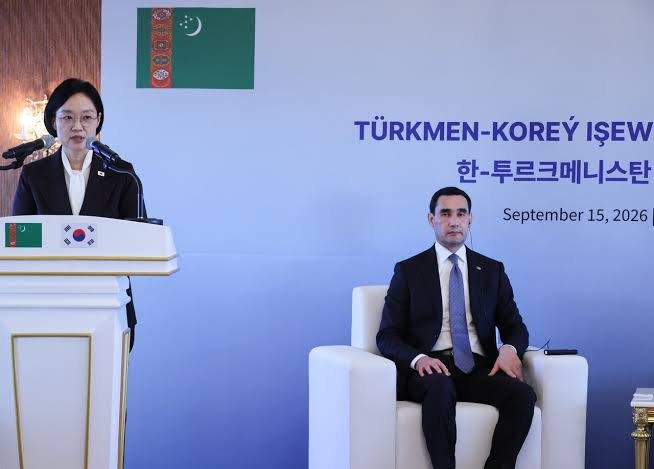
Since Serdar Berdimuhamedov assumed the presidency of Turkmenistan in March 2022, Sino‑Turkmen relations have intensified, reaching the level of a comprehensive strategic partnership.
In January 2023, during Serdar Berdimuhamedov’s first official visit to China, the two heads of state elevated bilateral relations to the status of a comprehensive strategic partnership. Meetings have been frequent, notably on the sidelines of China–Central Asia summits (such as in June 2025), confirming a mutual desire for deeper cooperation. Xi Jinping met Turkmen President Serdar Berdimuhamedov again in June 2025.
Conclusion
Central Asia, endowed with abundant natural resources and a highly strategic geographical position, continues to attract strong interest from major global powers such as China, Russia, the European Union, and the United States. Among these actors, China has established itself as a central and influential force, particularly through its long-term vision embodied in the Belt and Road Initiative.
Historically connected through the Silk Road, Central Asia remains a key crossroads between East and West. Today, economic, political, and cultural ties between China and Central Asian countries are deepening significantly, creating a growing interdependence that shapes contemporary regional dynamics.
This cooperation reflects converging strategic interests. For China, Central Asia is essential for ensuring energy security, stabilizing its western borders, and expanding connectivity toward European markets. For Central Asian states, China represents a vital partner for economic development, infrastructure investment, and regional integration.
Within this broader framework, Turkmenistan occupies a particularly distinctive position. Its vast natural gas reserves, strategic location, and internationally recognized policy of permanent neutrality make it a unique and valuable partner. Its role as a major supplier of natural gas to China, combined with its participation in large-scale infrastructure projects such as the China–Central Asia gas pipeline, underscores the depth and importance of bilateral relations.
Ultimately, China–Turkmenistan relations extend beyond simple bilateral cooperation. They play a crucial role in shaping the geopolitical, economic, and energy dynamics of Central Asia and, more broadly, the Eurasian continent.
BIBLIOGRAPHY
- Ambassade de la République populaire de Chine. (2025, 18 juin).
https://ml.china-embassy.gov.cn/fra/zgyw/202506/t20250618_11652698.htm - EUReflect – European News & Analysis
- Alperen, Ü. (2018). «Bir Kuşak Bir Yol» Girişimi et Çin’in Orta Asya Politikası. Bilge Strateji , 10 (19), 17-38.
- Anceschi, Luca. (2021). La politique étrangère du Turkménistan : neutralité positive et consolidation du régime turkmène. Royaume-Uni : Routledge.
- Annette. (2018). Turkménistan : Pouvoir, politique et pétro-autoritarisme. Rapport de Chatham House. Dannreuther,
- Azizova, Dilyara. (2017). Géopolitique de l’énergie en Eurasie : le cas du Turkménistan. [Thèse] Turquie : Université Sabanci, Badykova.
- Bayramli, N. (3 janvier 2026). La Chine va accélérer l’extraction du gisement gazier géant du Turkménistan. Caspian News.https://caspiannews.com/news-detail/china-to-accelerate-extraction-at-turkmenistans-giant-gas-field-2026-1-3-0
- China Daily. (2026, March 19). China, Turkmenistan pledge deeper ties
- https://www.chinadaily.com.cn/a/202603/19/WS69bb637da310d6866eb3eaf5.html
- Blank, Stephen J. (2011). Tendances sécuritaires en Asie centrale : points de vue européens et russes. Strategic Studies Institute Bohr.
- Société nationale chinoise du pétrole. (s.d.) Asie centrale.
- https://www.cnpc.com.cn/en/CentralAsia/CentralAsia_index.shtml
- China Daily. (2026, March 19). Rising trade lifts regional economic ties
- https://www.chinadaily.com.cn/a/202603/19/WS69bb637da310d6866eb3eaf5.html
- CGTN Français. (2026, 19 janvier). Les importations en provenance de…
- https://francais.cgtn.com/news/2026-01-19/2013084730658152449/index.html
- Cutler, RM (2010). Le gazoduc Turkménistan-Chine devient une réalité. Institut Asie centrale-Caucase , 2 .
- Duran, H., & Pusevsuren, N. (2016). LA POLITIQUE DE LA CHINE EN ASIE CENTRALE DANS LE CONTEXTE DE LA SÉCURITÉ, DE L’ÉNERGIE ET DU MARCHÉ. Dumlupınar University Journal of Social Sciences , 281-294.
- Du, X., & Sun, H. (2023). La perception de la culture chinoise au Turkménistan. Academic Journal of Humanities & Social Sciences , 6 (23), 86-93.
- Eurasianet. (12 janvier 2026). Une entreprise chinoise s’apprête à accroître sa production sur l’immense gisement gazier du Turkménistan.
- https://eurasianet.org/chinese-company-poised-to-expand-production-at-massive-turkmen-gas-field
- Fazliddin, D., Schrier, A., & Khakimova, M. (2025). Expanding Beyond Conventional Connections: Central Asian Nations Establish New Partneships. Economic Diplomacy, 3(1), 74-83.
- Hancock, K. J. (août 2006). Fuir la Russie, se tourner vers la Chine : le Turkménistan fonde ses espoirs sur la soif de gaz naturel de la Chine. Dans China and Eurasia Forum Quarterly (Vol. 4, n° 3, p. 67-87).
- Ismayilov, E., & Budak, T. (2014). Politique énergétique du Turkménistan après l’indépendance. Bilge Strateji , 6 (11), 29-49.
- KANAPİYANOVA, Z. (2022). Coopération et projets gaziers naturels du Turkménistan. SOCIAL SCIENCES JOURNAL , 226.
- Khadim, N., & Khadim, A. (2024). Importance du Turkménistan dans la région d’Asie centrale : une analyse géostratégique. Annals of Human and Social Sciences , 5 (4), 165-173.
- Ministère des Affaires étrangères de la République populaire de Chine. (2026, 19 mars). [Titre de l’article] .
- https://www.fmprc.gov.cn/fra/zxxx/202603/t20260319_11877422.html
- Myrat, H., & Jun, Y. Z. (2023). Commerce de gaz naturel entre le Turkménistan et la Chine dans le contexte de l’initiative « la Ceinture et la Route ». Int. J.Bus. Mark. Manag , 8 , 121-130.
- Najia. (2005). La coopération régionale en Asie centrale : le point de vue du Turkménistan. DOI : 10.1080/10611991.2005.11050006
- Sarı, K. (2018)., La diplomatie énergétique de la Chine avec les pays d’Asie centrale. Symposium international sur l’essor de la Chine et l’initiative « la Ceinture et la Route ». Actes du 25e symposium , 91.
- Yi, M. (2026, 19 mars). La Chine et le Turkménistan renforcent leur partenariat : coopération accrue, stabilité consolidée. CGTN.
- https://news.cgtn.com/news/2026-03-19/China-Turkmenistan-double-down-on-a-steady-partnership-1LE3pgs1uBq/p.html
- Tashmatova, K. (2015). RELATIONS ASIE CENTRALE-CHINE QUELQUES PERSPECTIVES. ÉTUDES HIMALAYENNES ET CENTRALESIASES Éditeur : K. WARIKOO Éditeur associé invité : MIRZOKHID RAKHIMOV , 168.
- Tullekova, D. (2024). Çin’in Enerji Alanında Orta Asya ile İş Birliği. Journal des études régionales de Cappadoce , 6 (1), 29-55.
- Xi Jinping. (2014). The governance of China. Foreign Languages Press.
- Xinhua. (2026, March 19). Xi calls for strengthening cooperation with Turkmenistan in natural gas, trade, non-resource fields. CPPCC.
- http://en.cppcc.gov.cn/2026-03/19/c_1169458.htm
- Forbes, Andrew. (2021). La mer Caspienne : Une quête de sécurité environnementale. ResearchGate.
- Laruelle, Marlène et Peyrouse, Sébastien. (2013). Mondialisation de l’Asie centrale : géopolitique et défis du développement économique (1re éd.). Royaume-Uni : Routledge, https://doi.org/10.4324/9781315704036.
- Lewis, David G. (2020). Le nouvel autoritarisme russe : Poutine et la politique de l’ordre. Edinburgh University Press.
- Rowman & Littlefield Muzaffar, M., Yaseen, Z. et Rahim, N. (2017). Dynamiques changeantes de la politique mondiale : transition d’un monde unipolaire à un monde multipolaire. Liberal Arts and Social Sciences International Journal, I (I), 49-61.

Historian and environmental management expert on Central Asia and researcher on Central Asia post-Soviet period. Journalist for EuReporter and EuReflect and Special Director of “The Gulf Observer” for Europe and Central Asia.