Hanoi, August 05, 2026 – The Europe Today: Vietnamese Prime Minister Lê Minh Hưng has called on the country’s diplomatic corps to play a more proactive role in translating Vietnam’s expanding international partnerships into tangible economic gains, saying diplomacy will be central to achieving the nation’s ambitious double-digit growth target.
Speaking at the plenary session titled “Diplomacy Serving National Development in the New Era” during the 33rd Diplomatic Conference in Hà Nội on Tuesday, the Prime Minister said Vietnam is entering a crucial phase of development as it begins implementing the Resolution of the 14th National Party Congress.
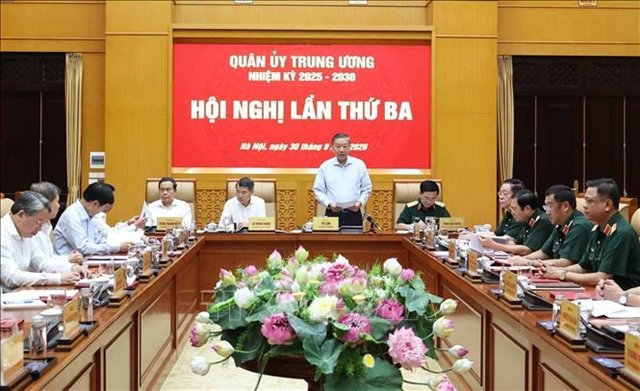
Hưng said the Party Central Committee’s third plenum had endorsed 13 major policy initiatives designed to drive four strategic transformations: strengthening governance, improving the management of national development resources, shifting to a productivity- and innovation-led growth model, and enhancing national resilience and security.
He emphasized that these priorities place diplomacy at the heart of Vietnam’s development strategy, praising the diplomatic sector for helping maintain a peaceful external environment, expanding international markets, attracting investment and advanced technology, and supporting the country’s economic restructuring.
The Prime Minister highlighted the steady expansion of Vietnam’s global engagement, noting that nearly 1,400 international agreements have been signed since the 13th National Party Congress. More than 300 new commitments have been reached since the beginning of 2026, while over 1,100 agreements are currently being monitored through the Ministry of Foreign Affairs’ implementation tracking system.
Despite these achievements, Hưng warned that Vietnam faces growing external challenges, including intensified geopolitical competition, slowing global economic growth, and persistent inflationary pressures. As one of the world’s most open economies, he said, Vietnam remains highly vulnerable to external shocks and must cultivate new drivers of sustainable growth.
He stressed that diplomacy in the new era should focus on improving productivity, competitiveness, economic resilience, and self-reliance while closely aligning with the strategic objectives set by the 14th National Party Congress.
“For more than 80 years, Vietnamese diplomacy has stood on the front line at every critical moment in the nation’s history,” Hưng said. “In the new era, diplomacy must not only safeguard peace, stability and national sovereignty, but also transform Vietnam’s international standing into resources that drive national development.”
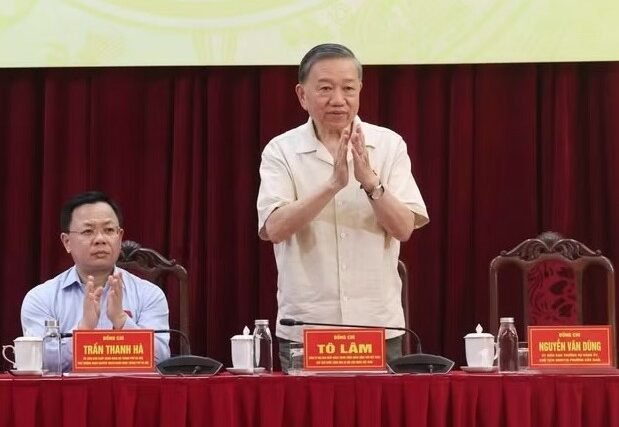
Addressing the conference, Foreign Minister Lê Hoài Trung reiterated the directive of General Secretary and State President Tô Lâm that upgraded foreign relations must produce concrete programmes, projects, and measurable outcomes.
He said the success of Vietnam’s foreign policy should be measured not by the number of diplomatic exchanges or partnership agreements but by their contribution to peace, economic development, market expansion, technology transfer, workforce development, and improvements in people’s lives.
Trung noted that Vietnam’s diplomatic missions increasingly support businesses, local authorities, and communities by identifying new markets, strengthening partnerships, resolving disputes, and mobilising international resources.
Between 2024 and 2025, Vietnam’s overseas representative missions organised more than 1,200 trade, investment, and tourism promotion activities, facilitated over 550 local partnership initiatives, and helped conclude around 230 cooperation agreements.
He also highlighted the growing importance of vaccine diplomacy, energy diplomacy, and science and technology diplomacy in supporting national development. Since the beginning of 2025, more than 150 cooperation agreements in science, technology, and innovation have been signed during high-level diplomatic engagements, while overseas missions have connected more than 50 Vietnamese localities and organisations with international partners, including 12 of the world’s leading technology companies.
Acknowledging the need for further reforms, the foreign minister said greater efforts are required to convert diplomatic partnerships into practical development projects, strengthen coordination among domestic and overseas institutions, enhance the role of diplomatic missions abroad, and improve strategic forecasting and policy advice.
Looking ahead, Trung outlined three priorities for Vietnam’s diplomatic sector: transforming diplomacy from a supporting function into a driver of development, aligning diplomatic activities more closely with national socio-economic and innovation goals, and modernising the diplomatic workforce through stronger economic expertise, enhanced implementation mechanisms, and results-based performance management.
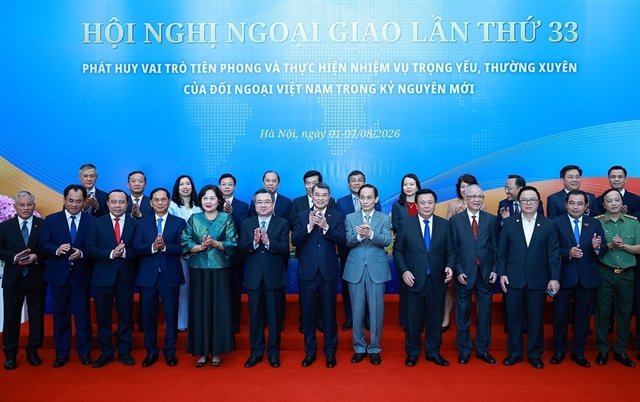
The 33rd Diplomatic Conference, being held in Hà Nội from August 1 to 7 under the theme “Promoting the Pioneering Role and Fulfilling the Core and Regular Tasks of Vietnam’s External Affairs in the New Era,” is the first such conference convened during what the Communist Party describes as the country’s new era of national development and prosperity. The gathering aims to unify strategic thinking across the diplomatic sector and identify practical measures to support Vietnam’s development objectives through 2030.