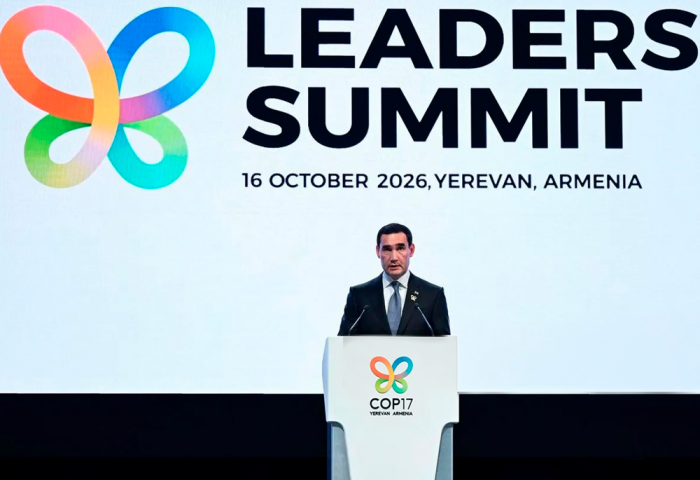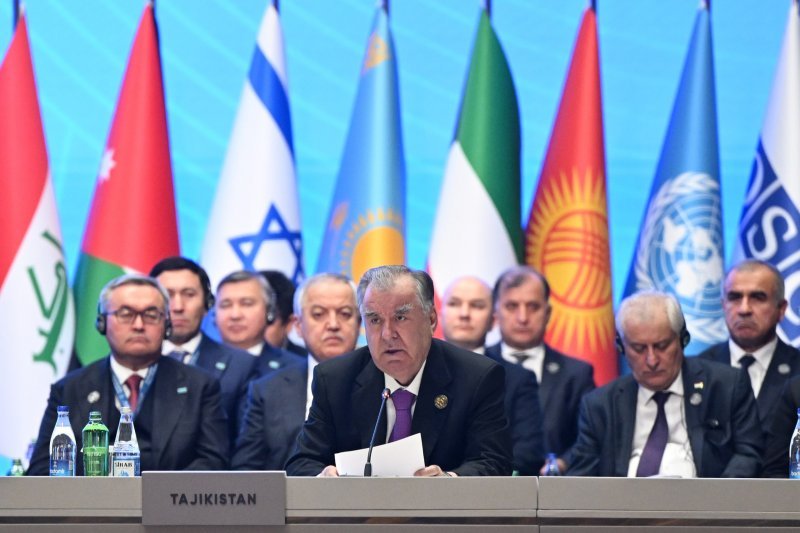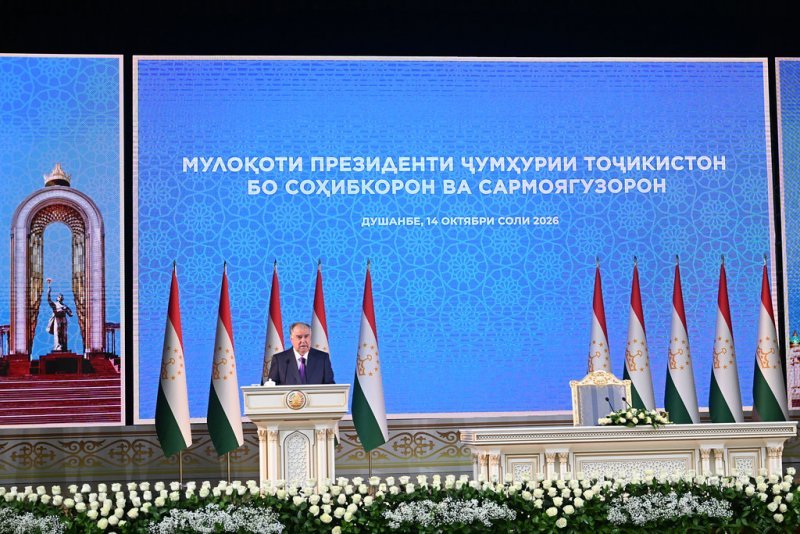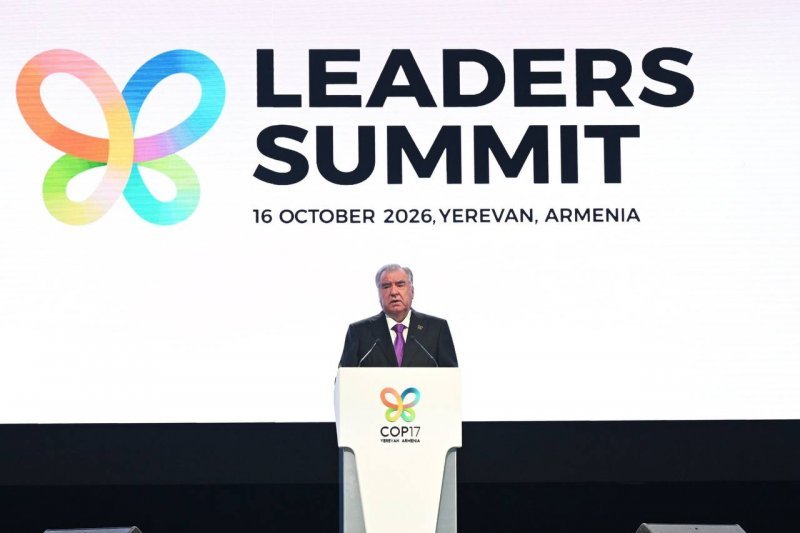
Yerevan, October 17, 2026 – The Europe Today: Tajikistan President Emomali Rahmon has called for stronger international cooperation to protect biodiversity, preserve fragile ecosystems and address the growing environmental challenges posed by climate change, stressing the need to translate global commitments into concrete action.
Addressing the Leaders’ Summit on Biodiversity in Armenia, President Rahmon expressed gratitude to the Armenian government and the Secretariat of the United Nations Convention on Biological Diversity for organising the summit and providing an opportunity to discuss one of the most pressing issues on the global agenda.
He said biodiversity conservation and nature protection were among the key priorities of Tajikistan’s sustainable development policy and efforts to improve public well-being.
The President highlighted the country’s progress in developing a legal and strategic framework for environmental protection. Tajikistan has adopted 25 laws and several important strategic documents, including its National Strategy for the Conservation and Sustainable Use of Biodiversity through 2040.
The strategy has been updated in line with the objectives of the Kunming-Montreal Global Biodiversity Framework, taking into account the country’s national priorities, needs and capabilities.
Rahmon also noted that Tajikistan had joined 11 international environmental conventions, including the UN Convention on Biological Diversity, demonstrating its commitment to international environmental cooperation.
Highlighting the country’s unique natural environment, he said mountains cover approximately 93 per cent of Tajikistan’s territory, supporting diverse and distinctive ecosystems.
He emphasised that the country continued to prioritise the protection of rare and endangered wildlife species. Over the past decade, the population of markhor had increased fourfold, while the populations of Marco Polo sheep and snow leopards had risen by approximately 50 per cent.
The President underscored the importance of international initiatives in protecting endangered species, noting that, at Tajikistan’s initiative, the United Nations General Assembly had designated May 24 as International Markhor Day to promote the conservation of the species and the protection of its natural habitat.
He stressed that involving local communities and creating economic opportunities linked to environmental conservation were essential to achieving sustainable results. In this regard, he identified ecotourism as an effective means of combining nature protection with the socioeconomic development of local communities.
Addressing the challenges facing biodiversity, Rahmon called for joint measures to improve the monitoring and assessment of endangered species populations. He also highlighted the need to expand greening initiatives, improve waste management and promote green industry and sustainable urban development.
The President warned that ecosystems were under increasing pressure from climate change, environmental degradation, unsustainable land use and other human activities.
He noted that Tajikistan continued to experience the consequences of climate change, including the accelerated melting of glaciers, droughts, dust storms, floods, mudflows and landslides.
Rahmon stressed that climate change adaptation and disaster risk reduction were integral components of Tajikistan’s long-term sustainable development strategy.
He further emphasised the close relationship between biodiversity conservation, water resource protection, glacier preservation and the health of mountain ecosystems, calling for better coordination of international efforts on water, climate and biodiversity.
The President recalled that Tajikistan had advanced several global initiatives on water and climate over more than 25 years, many of which had received support from the United Nations and the international community.
He said these initiatives had contributed to advancing global water-related objectives, including those under the 2030 Agenda for Sustainable Development. The high-level international conferences held under the Dushanbe Water Process had also become important platforms for political dialogue, partnerships and the development of joint initiatives ahead of United Nations water conferences.
Rahmon highlighted the forthcoming 2028 UN Water Conference in Dushanbe, which will provide a comprehensive assessment of the implementation of the International Decade for Action “Water for Sustainable Development”, 2018–2028, and help shape the next phase of international cooperation on water.
He expressed confidence that biodiversity and other environmental issues would feature prominently in the conference’s interactive dialogues, adding that its final outcome document, known as the “Dushanbe Water Process Framework,” could make a meaningful contribution to addressing biodiversity-related challenges.
Turning to the protection of glaciers and the cryosphere, Rahmon warned that the rapid retreat of glaciers had become one of the clearest indicators of climate change.
He noted that Tajikistan had lost more than 1,300 glaciers over recent decades, making glacier preservation and cryosphere research matters of both national and global importance.
The President recalled that, at Tajikistan’s initiative, the UN General Assembly had proclaimed 2025 the International Year of Glaciers’ Preservation and March 21 as World Day for Glaciers.
He also highlighted the launch of the International Decade of Action for Cryospheric Sciences, 2025–2034, initiated jointly by Tajikistan and France to strengthen scientific research and international cooperation on the cryosphere.
Concluding his address, Rahmon urged world leaders to move beyond acknowledging environmental challenges and focus on coordinated action and measurable results.
He stressed that effective biodiversity conservation required a combination of political commitment, scientific knowledge, financial and technological resources, efficient monitoring systems and international cooperation.
The President expressed hope that the summit would provide fresh momentum to global partnerships aimed at protecting biodiversity and addressing wider environmental challenges.