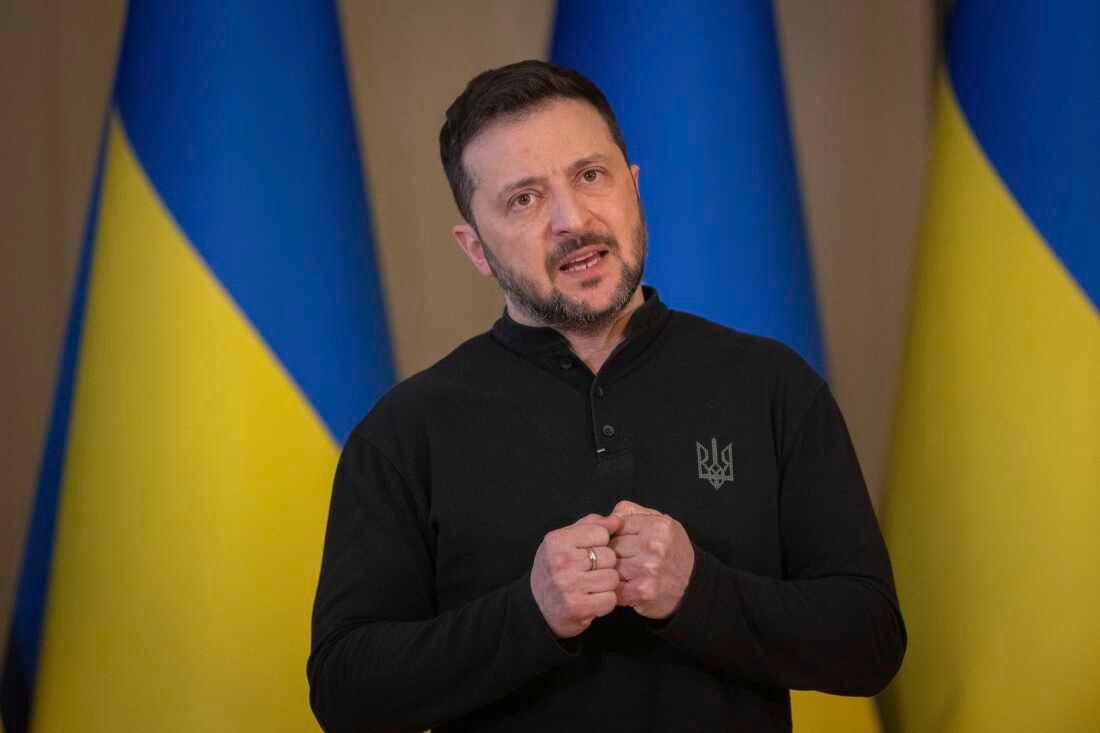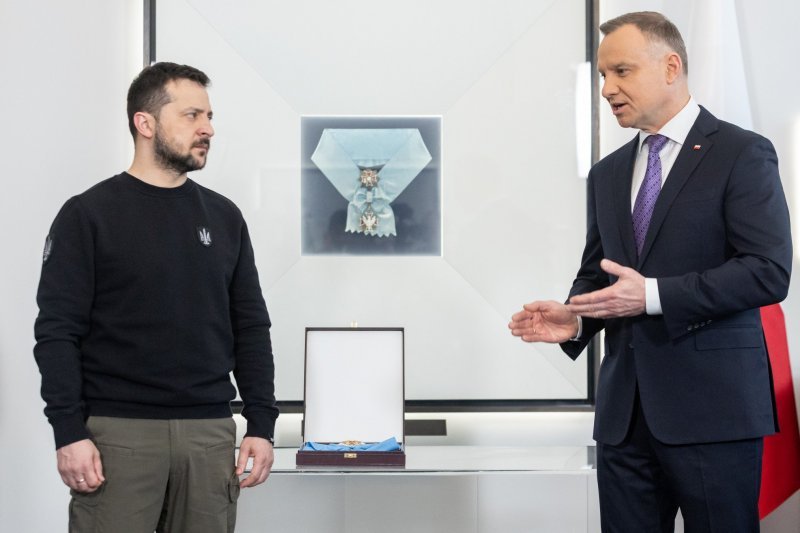
Warsaw, June 20, 2026 – The Europe Today: Polish President Karol Nawrocki has revoked the Order of the White Eagle, Poland’s highest state decoration, previously awarded to Ukrainian President Volodymyr Zelenskyy, citing concerns over Ukraine’s decision to name a military unit after historical figures linked to the Ukrainian Insurgent Army (UPA).
The decision, announced on June 19, marks a new point of tension in relations between the two neighboring countries despite their close cooperation since the start of Russia’s invasion of Ukraine.
Addressing the issue, President Nawrocki stressed that the move was not directed against the Ukrainian people and did not signal any change in Poland’s strategic support for Ukraine.
“I want to emphasize that this decision is not directed against the Ukrainian people. We supported and continue to support Ukraine because we know that Russian aggression poses a threat to the security of Poland and all of Europe,” he said.
The Polish leader argued that the naming of a Ukrainian military unit after figures associated with the UPA went beyond Ukraine’s domestic affairs and carried implications for bilateral relations. He noted that Warsaw had previously communicated its concerns to Kyiv and had hoped for a different outcome.
While acknowledging progress in recent years toward addressing difficult historical issues between the two countries, Nawrocki described Ukraine’s stance on the legacy of the UPA as disappointing. He reaffirmed his commitment to protecting Poland’s historical memory, national values and the dignity of state symbols.
The president also linked the issue to Ukraine’s aspirations for European integration, arguing that countries seeking membership in the European Union must be willing to confront sensitive historical matters.
“These principles must be binding for all. For those who do not understand this, there can be no place in the European Union, and Poland will undoubtedly not allow it,” Nawrocki stated.
At the same time, he warned that disputes over historical memory could benefit Moscow by creating divisions between Poland and Ukraine.
In response, Ukrainian Foreign Minister Andrii Sybiha criticized the Polish decision and announced that he would return the Commander’s Cross with Star of the Order of Merit of the Republic of Poland, which had been awarded to him in 2022.
“Against the backdrop of such reckless actions, I see no possibility of retaining the high state award of the Republic of Poland granted to me,” Sybiha said.
The Ukrainian foreign minister emphasized that Kyiv had spent the past year and a half working to depoliticize historical issues, facilitate academic cooperation and address archival and exhumation requests raised by Warsaw.
He described the latest development as unnecessary and counterproductive, arguing that both countries should focus on dialogue rather than escalating tensions.
“We regret that instead of seeking solutions, the Polish side decided to escalate this tension to an unacceptable and inadequate level. No president of another country will dictate our history to us,” Sybiha said.
The dispute comes amid broader discussions between the two countries over historical memory and wartime legacies, issues that have periodically strained relations despite strong political and security cooperation.
Separately, Polish Defense Minister Władysław Kosiniak-Kamysz recently urged Ukraine to exercise greater caution in selecting targets for drone strikes inside Russia, warning that incidents involving drones entering Baltic airspace could be exploited by Moscow for propaganda purposes and potentially increase security risks for NATO member states.
He stressed that greater precision in military operations would help prevent incidents that could be used by Russia to escalate tensions and intensify hybrid warfare activities in the region.
Despite the latest diplomatic disagreement, both Warsaw and Kyiv have reiterated the importance of maintaining cooperation in the face of ongoing regional security challenges posed by the war in Ukraine.