Hanoi, June 8, 2026 – The Europe Today: The capital city of Vietnam is accelerating digital transformation across its education sector through the expanded use of artificial intelligence (AI), digital learning materials, and the development of a comprehensive digital education ecosystem aimed at improving teaching quality and learning outcomes.
In line with national priorities on science and technology development, innovation, and education reform, schools across Hanoi are increasingly adopting online enrolment systems, digital resources, and AI-powered tools for teaching, learning, and student management.
Officials say these initiatives are not only improving school efficiency but also reshaping teaching methodologies and gradually equipping students with digital literacy skills needed in an increasingly technology-driven world.
From Traditional Classrooms to Digital Learning Models
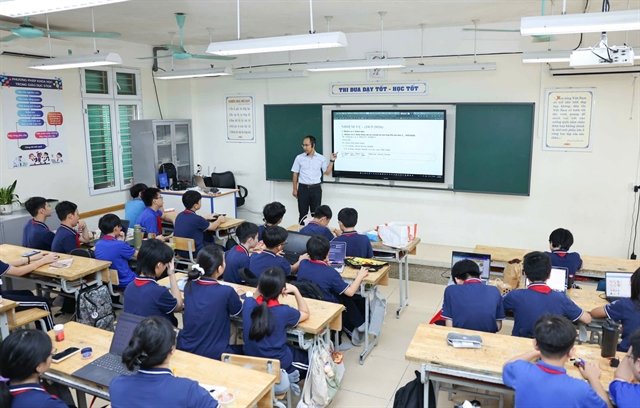
Since the 2025–2026 academic year, Giang Vo Secondary School has implemented a Google Digital Classroom model across three specialised classes, involving 156 students and 21 teachers. Each student is provided with a personal laptop or tablet, while the school uses controlled digital environments to ensure safe and supervised access to online content.
The school has invested significantly in digital infrastructure and teacher training, with all participating educators certified as Google Certified Educator Level 1 and proficient in the use of Google Workspace for Education tools and AI applications in teaching and assessment.
Giang Vo Secondary School has also developed an extensive digital learning repository containing hundreds of e-lectures, alongside nearly 20,000 digital learning materials and more than 800 e-books, significantly enhancing students’ access to knowledge beyond the classroom.
School principal To Thi Hai Yen said the model promotes student-centred, technology-integrated learning, helping improve engagement, retention, and digital skills, with independent assessments showing outcomes exceeding 92 per cent in key indicators.
AI Integration Expands in Classroom Teaching
At Nghia Tan Secondary School, the Literature Department recently conducted a thematic session on applying AI in reading comprehension lessons, combining technology with traditional literary study.
Students experienced AI-generated interviews with Vietnamese author Nguyen Nhat Anh and participated in interactive reading and role-play activities supported by multimedia tools, making lessons more engaging and immersive.
Teacher Nguyen Thi Tuyet emphasized that while AI enhances teaching effectiveness, it remains a supporting tool and cannot replace direct reading experiences, imagination, or emotional engagement with literature.
Building a Unified Digital Education Ecosystem
Despite progress, officials acknowledge disparities in infrastructure and digital access between urban and suburban areas, which continue to challenge the uniform implementation of digital education.
School leaders in outlying areas, including Quoc Oai High School, noted that digital transformation requires long-term reform, improved infrastructure, and stronger teacher training to ensure equal access to modern education tools.
Director of the Hanoi Department of Education and Training Nguyen Van Hien said AI and digital transformation are fundamentally reshaping education and society, requiring schools to focus not only on knowledge transfer but also on developing logical thinking, adaptability, and creativity.
He added that ahead of the 2026–2027 academic year, Hanoi will prioritise building a synchronised digital education ecosystem driven by data and AI, while strengthening STEM/STEAM education, robotics, and English proficiency to prepare students for global integration.