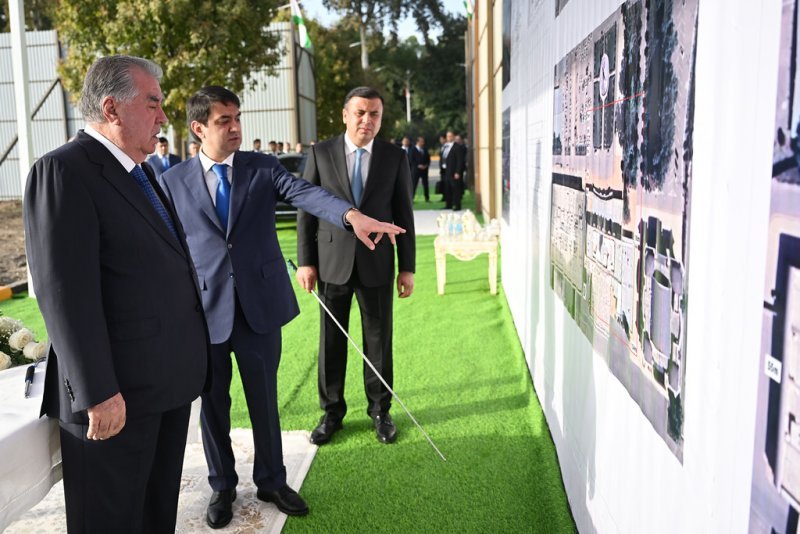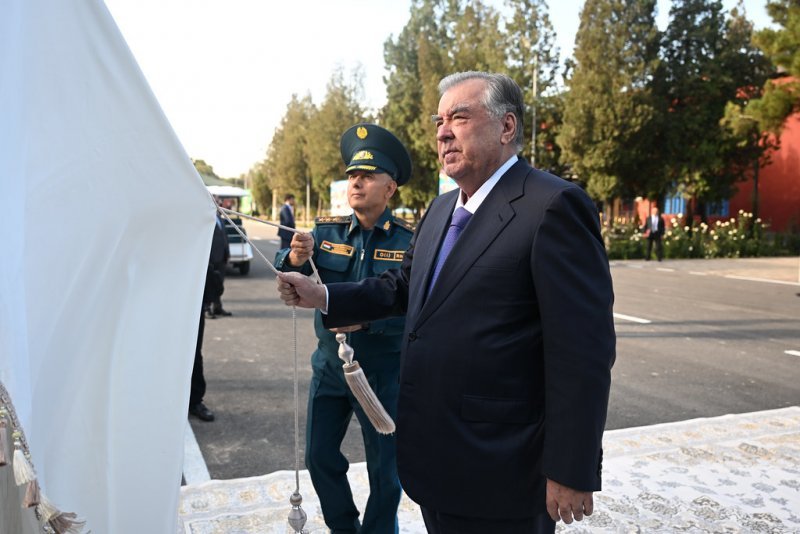
Dushanbe, October 14, 2026 – The Europe Today: President of Tajikistan Emomali Rahmon visited Shahrinav District on Tuesday to inaugurate several facilities across different sectors and review the living conditions of local residents, with a major focus on strengthening the country’s emergency response and civil protection capabilities.
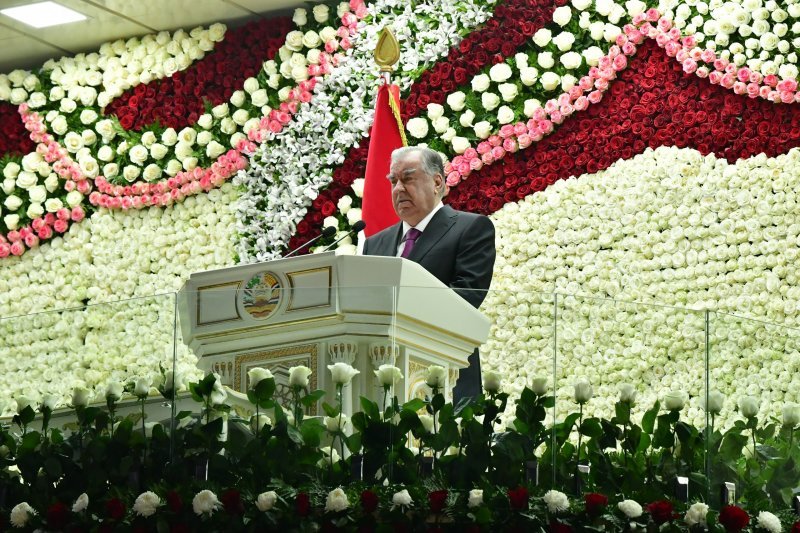
The president began his visit at the Republican Training and Methodological Centre of the Committee for Emergency Situations and Civil Defence, where he inaugurated the newly constructed Rescue Palace and visited its museum.
The two-storey building has been designed in line with modern standards and includes a spacious conference hall with seating for 366 people, a museum dedicated to the country’s national leader, and supporting facilities. The conference hall is equipped for meetings, conferences, training sessions and professional events.
The museum presents key stages in the revival of modern Tajik statehood and highlights the country’s development since independence, including efforts to restore peace and stability, strengthen national unity and promote Tajikistan internationally.
During the visit, Rahmon stressed the importance of effectively utilising the new facilities, improving the professional preparedness of personnel and strengthening training and educational activities.
The president also remotely inaugurated 16 important facilities at the centre. These include a training and canine centre, a training-ground control centre, a practical rescue training ground, a civil defence shelter, temporary accommodation for people affected by natural disasters and other emergencies, dormitories, a medical station, a canteen, accommodation for national and foreign instructors and rescuers, greenhouses, a sports ground and a bathhouse.
The newly established canine training centre provides facilities for training service dogs for search-and-rescue operations. It includes 12 offices and training classrooms, as well as 10 kennels and 10 additional rooms equipped with training materials for canine specialists.
The training-ground control centre will enable instructors to monitor practical rescue exercises from a dedicated observation room. It includes offices, a modern canteen and facilities for training and exercising rescuers.
Five outdoor training classrooms have also been established, with capacity to train up to 300 people simultaneously. They will serve as specialised facilities for developing theoretical knowledge and practical skills among personnel of the emergency committee and other national security agencies.
Training programmes cover engineering and tactical skills, mine detection and neutralisation, radiation, chemical and biological protection, and procedures for evacuating people from hazardous areas to safer locations. Participants will also learn techniques for constructing shelters and defensive structures, establishing obstacles and providing essential support to affected populations.
A dedicated ground for drill exercises, military training and ceremonial parades was also commissioned remotely.
Another major facility inaugurated during the visit was a practical training ground for rescuers, covering more than 10 hectares and featuring 20 training stages designed to prepare emergency personnel for natural disasters. According to officials, the facility offers extensive opportunities for practical exercises and is unique in the region in terms of its capabilities.
The training ground has hosted joint exercises involving rescuers from member states of the Collective Security Treaty Organization (CSTO), including Tajikistan, Kazakhstan, Belarus, Kyrgyzstan and Russia. Its facilities include specialised rescue vehicles, training areas for responding to technological emergencies and road accidents, diving-related emergency response facilities, and equipment for improving rescuers’ physical fitness.
A civil defence shelter was also inaugurated to provide protection for the population when required and strengthen preparedness for potential emergencies.
The centre’s temporary settlement for people displaced by natural disasters and other emergencies covers one hectare and contains 68 tents capable of accommodating 800 people. Its infrastructure includes a field hospital equipped to provide professional medical care and perform surgical procedures, a canteen for 800 people and other support facilities.
The newly built accommodation block provides 600 beds and includes 15 offices, six classrooms and surveillance systems. A separate canteen can serve 300 people, while a medical station has 14 beds and includes treatment rooms, a pharmacy and other essential facilities. Accommodation for national and foreign instructors and rescuers consists of 17 rooms with 80 beds.
The centre also features auxiliary agricultural greenhouses, sports facilities for football, volleyball, basketball and athletics, and other supporting infrastructure.
During the visit, Rahmon inspected a new educational building constructed with the support of the Tajik government and development partners as part of preparations for the 35th anniversary of the country’s state independence.
The building contains 20 fully equipped rooms dedicated to specialised training, including radiation, chemical and biological protection, first aid, technological emergency response, mountaineering, communications, civil defence and psychology. It also houses an electronic library and classrooms for theoretical and practical instruction.
Training is organised at three levels to accommodate participants with different responsibilities and professional requirements. The centre will also provide practical courses for officials from ministries, government agencies and local executive authorities on preventing natural disasters and responding to emergencies.
The president described the development of such facilities as important for improving rescuers’ professional skills, preparing specialised personnel and ensuring timely protection of citizens from natural and technological disasters.
Rahmon also inspected a newly constructed diving training facility, described as the first specialised building of its kind in Tajikistan. The facility contains two swimming pools with depths of 4.8 metres and 15 metres, three training and practice classrooms, and a conference room with 20 seats.
Equipped with modern diving technology, the building allows instructors to monitor exercises both underwater and on land through specialised cameras. It also includes a dedicated deep-diving training section and a pressure chamber, which can be used in the treatment of divers requiring medical assistance after prolonged underwater operations at depths exceeding 10 metres.
Officials said the facility would help train professional divers to international standards, taking into account Tajikistan’s varied geographical conditions, including its mountains, water bodies and diverse climate.
The president instructed officials to make effective use of the facility, improve the quality of diving training and prepare highly skilled specialists.
As part of the visit, Rahmon also inaugurated a guest reception building comprising 18 rooms and designed to accommodate 25 people at a time. The facility includes meeting rooms for official discussions and videoconferences, offices, residential rooms and a canteen with capacity for 54 people. It is intended to host foreign guests and facilitate official meetings and cooperation-related discussions.
The president further visited the command and observation post for the special exercise “Skala-2026,” which involves rescue units from CSTO member states and focuses on preventing and responding to emergencies.
The exercise is based on a simulated scenario involving the aftermath of a devastating earthquake in Tajikistan, alongside secondary technological emergencies. Rescue teams from Tajikistan, Kazakhstan, Kyrgyzstan, Belarus and Russia are participating in coordinated operations using specialised rescue equipment and machinery.
Rahmon observed the rescue operations and praised the preparedness, professional skills and coordination of Tajik rescuers working alongside their foreign counterparts.