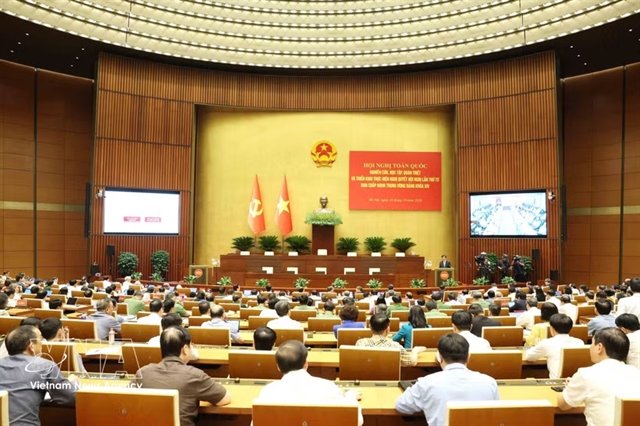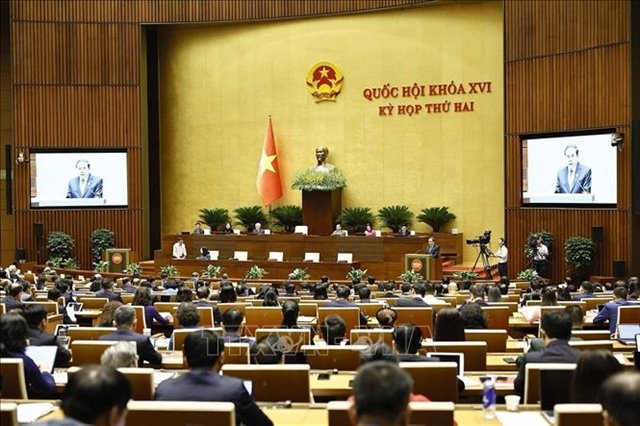
Hanoi, October 17, 2026 – The Europe Today: The second session of Vietnam’s 16th National Assembly opened in Hà Nội on Saturday, with National Assembly President Trần Thanh Mẫn calling for continued institutional reforms, high-quality legislation and effective policy decisions to unlock national resources and accelerate rapid and sustainable development.
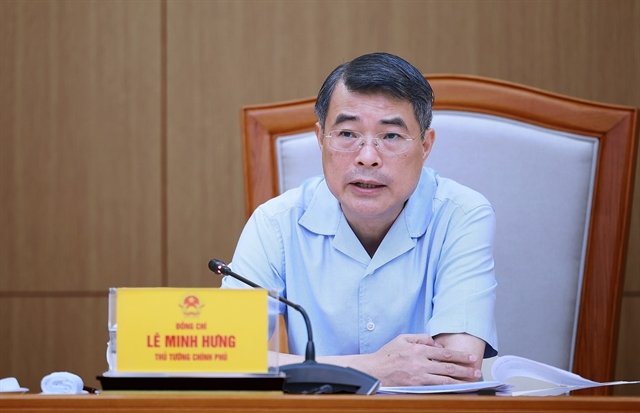
The opening session was attended by General Secretary of the Communist Party of Vietnam Central Committee and President Tô Lâm, Prime Minister Lê Minh Hưng, Standing Member of the Party Central Committee’s Secretariat Trần Cẩm Tú, incumbent and former Party and State leaders, foreign ambassadors and representatives of international organisations based in Hà Nội.
Addressing the session, National Assembly President Mẫn said the meeting was being held shortly after the fourth plenum of the 14th Party Central Committee and less than two months after the legislature’s first extraordinary session. He said the timing reflected the country’s determination to translate the Party’s guidelines and decisions into laws and policies, remove institutional bottlenecks, mobilise resources and establish new drivers for national development.
He urged relevant agencies to strengthen coordination, proactively resolve major and complex issues where differences of opinion remained, and strictly observe deadlines for submitting documents to ensure that lawmakers had sufficient time to review proposals and make informed decisions.
Highlighting the country’s economic performance, Mẫn said Vietnam had achieved encouraging socio-economic results despite numerous challenges. Gross domestic product grew by 9.01 per cent year-on-year in the first nine months of 2026, marking the highest growth rate in 15 years.
He noted that major economic balances had remained broadly stable, social security had received due attention, and national defence and security had been maintained. The country had also achieved important results in foreign affairs while continuing efforts to strengthen Party building and combat corruption, wastefulness and other negative practices.
The National Assembly President said the fourth plenum of the Party Central Committee had reached consensus on key targets and tasks for the coming year, emphasising the need for faster economic growth and breakthroughs to establish a stronger foundation for subsequent years.
He stressed that high growth must be supported by improved productivity, enhanced competitiveness and greater economic self-reliance, while safeguarding long-term stability, advancing social progress and equity, protecting the environment and improving living standards.
Mẫn underscored that parliamentary decisions must be timely, accurate, appropriately targeted and practically feasible, producing tangible improvements in implementation. He said strengthening legislative quality, supervisory effectiveness and decision-making on major national issues remained essential to ensuring that institutional reforms translated into concrete development outcomes.
He added that development objectives must be closely linked with the effective mobilisation, allocation and utilisation of resources.
The session is expected to address a substantial workload across three main areas: legislation, socio-economic development and state budget affairs, and parliamentary supervision.
On legislation, the National Assembly is scheduled to consider 47 draft laws and resolutions, of which 43 are expected to be adopted and four discussed. The workload represents the largest legislative agenda since the beginning of the 16th legislature’s term.
The proposed legislation covers a wide range of areas directly affecting production, business operations, citizens’ legitimate rights and interests, and national development. Key areas include land, housing, real estate business, investment, the state budget, and law-making and enforcement.
Mẫn emphasised that the objective was not simply to pass a large number of laws and resolutions, but to ensure that each measure was of high quality, practical, consistent and coherent with the wider legal framework.
On socio-economic and budgetary matters, lawmakers will review implementation of the 2026 plan and decide on socio-economic development targets, the state budget estimate, central budget allocation and public investment plans for 2027. They will also consider the final accounts of the 2025 state budget and other important matters falling within the legislature’s authority.
Regarding parliamentary oversight, deputies will examine reports on recommendations submitted by voters and the public, the settlement of those recommendations, citizen reception, and the handling of petitions and complaints. Question-and-answer sessions will also be held as part of the supervisory process.
Emphasising the need for greater responsibility in view of the extensive agenda, Mẫn said issues with established facts and sufficient political, legal and practical grounds should be decided promptly. New or contentious matters, however, required thorough examination to identify the most appropriate solutions.
He cautioned that the quality of legislation and decisions must not be compromised by deadline pressures, while excessive caution should not become an excuse for delays.
Every decision, he said, must clearly define responsibilities, available resources, implementation conditions, oversight mechanisms, feasibility and expected effectiveness.
The National Assembly President called on deputies to demonstrate political resolve, sound judgement and a strong sense of responsibility towards voters, the public and the nation. He urged them to attend all sittings, study documents thoroughly and contribute substantive and practical opinions to deliberations.
He reiterated that national interests and the legitimate rights and interests of the people must remain the foremost considerations in all parliamentary decisions.
Mẫn expressed confidence that the second session of Vietnam’s 16th National Assembly would complete its entire agenda to the highest possible standard, contributing to institutional improvements and the country’s rapid and sustainable development.