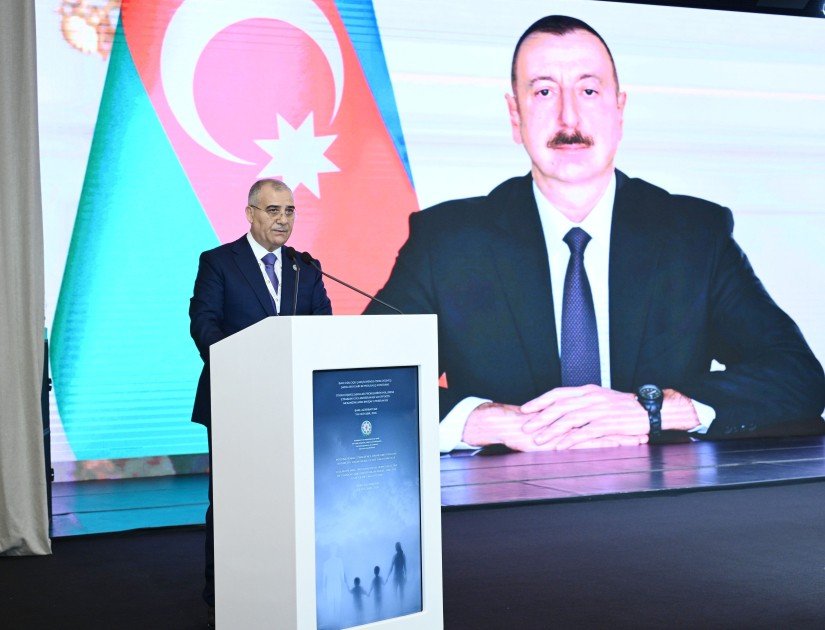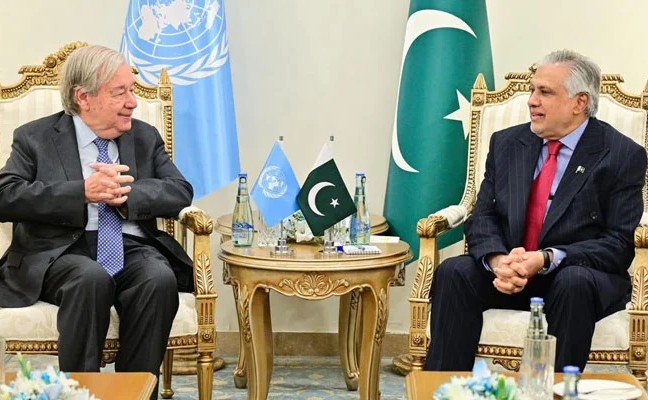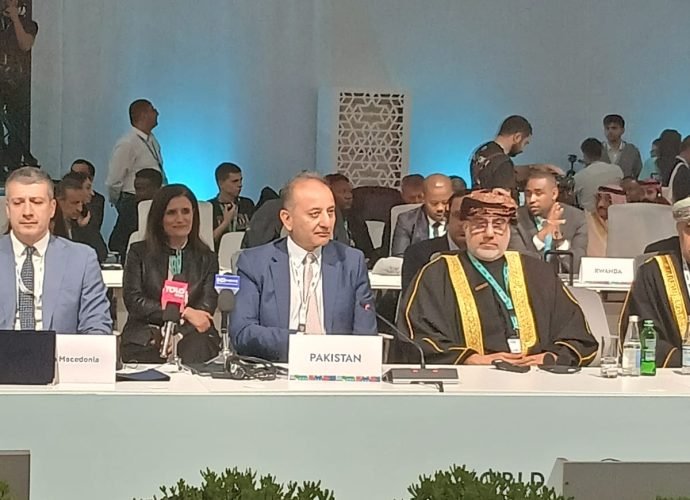
Baku, May 18, 2026 – The Europe Today: Pakistan’s Federal Minister for Climate Change and Environmental Coordination Musadik Malik told delegates at the World Urban Forum on Sunday that climate change was no longer merely an environmental issue but a “crisis of justice” disproportionately affecting poor and vulnerable urban communities.
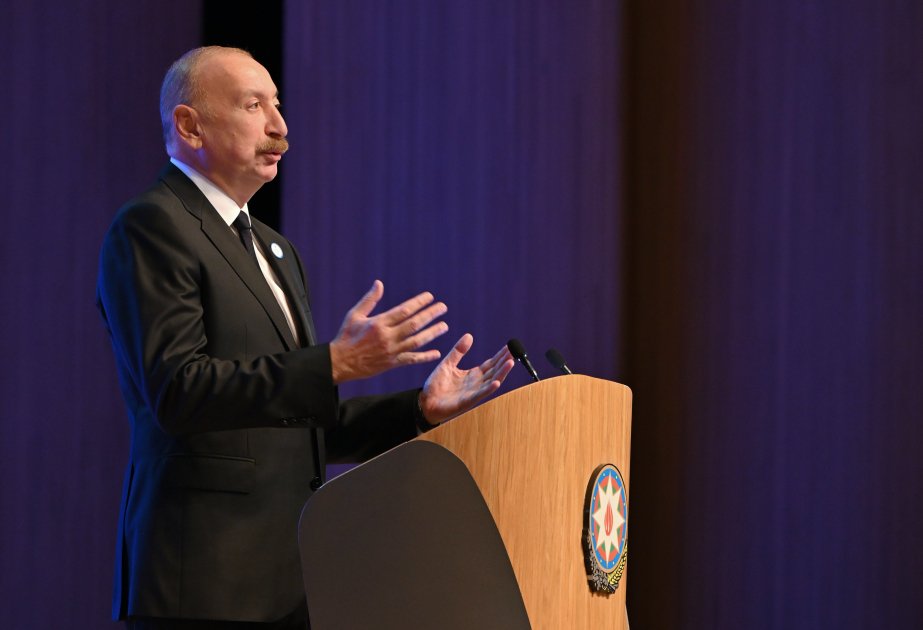
Delivering Pakistan’s national ministerial statement during the 13th Session of the World Urban Forum in Baku, the minister highlighted the growing challenges of urban inequality, climate vulnerability and inadequate housing faced by millions across Pakistan.
Malik recalled scenes from the devastating floods that struck Pakistan in recent years, describing the image of a child standing beside his father while holding a torn notebook after their home had been swept away.
“Two generations of efforts, probably, washed away because the housing stock was not resilient,” he said, warning that climate-related disasters were trapping vulnerable families in long-term cycles of poverty.
Addressing international delegates, the minister stressed that the housing crisis confronting developing countries should be viewed through the lens of justice rather than charity.
“This is not a housing crisis; this is a crisis of justice,” he said.
The minister noted that nearly half of Pakistan’s population of around 240 million now resides in urban areas, with approximately 55 million people living in slums lacking adequate housing and essential civic infrastructure.
“Slums are not a policy category; slums are a life category. Real people live in these slums,” Malik said.
He described difficult living conditions faced by low-income households, where six to eight family members often share small two-room homes without reliable electricity, sanitation, healthcare access or proper educational facilities.
Highlighting the impact of climate change on urban centres, the minister referred to a severe 2024 heatwave in Karachi, where temperatures reportedly reached 47 degrees Celsius.
Citing data gathered by a welfare organisation involved in transporting bodies to hospitals, Malik said approximately 560 bodies were moved during a seven-day period amid the extreme heat.
“Who died? The poor died. The most disenfranchised died,” he said, adding that affluent communities with access to air conditioning were less affected.
The minister also drew attention to the broader humanitarian impact of repeated flooding disasters in Pakistan, stating that around 6,000 people had lost their lives while nearly 20,000 others had suffered injuries or permanent disabilities.
He said approximately 40 million people had been displaced during major flood events, adding that the long-term consequences extended beyond physical destruction to education disruption and social instability.
“If children miss school for 90 days, about 1.8 billion school days are lost,” he said.
While acknowledging ongoing federal, provincial and municipal initiatives aimed at improving housing and climate resilience, Malik admitted that affordable housing was still often treated as a welfare programme instead of a basic human right.
“We should not build housing for investors; we should build housing for the people,” he said.
Calling on global leaders to ensure that the “Baku Call for Action” addresses inequality and housing speculation, the minister urged policymakers to prioritise inclusive and climate-resilient urban development.
“At the end, when we talk about housing, the real question is: housing for whom?” Malik asked. “Do we truly mean everyone?”