Hanoi, June 30, 2026 – The Europe Today: Vietnam is shifting its foreign direct investment (FDI) strategy from prioritising capital inflows to attracting high-quality, innovation-driven investment that complements domestic strengths and supports sustainable economic growth, officials announced at a national conference on June 30.
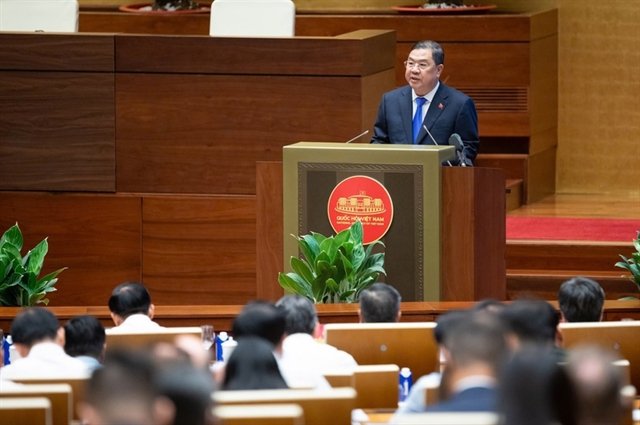
The new policy direction was outlined during a hybrid conference on implementing the Politburo’s Resolution No. 10-NQ/TW on developing the foreign-invested economic sector. The event included a review of four decades of FDI attraction in Vietnam and featured a keynote presentation by Phạm Gia Túc.
Addressing the conference, Deputy Prime Minister Túc said Vietnam’s investment strategy is undergoing a fundamental transformation. While attracting international capital had been the country’s priority over the past four decades, the next phase would focus on maximising the effectiveness of foreign investment by combining it with domestic capabilities to enhance economic resilience, competitiveness and long-term development.
He said the new resolution broadens Vietnam’s approach beyond traditional foreign direct investment to encompass direct and indirect investment, capital markets, international financial institutions and other sources of global finance, while recognising the foreign-invested sector as an integral part of the national economy.
Under the new strategy, the government will prioritise investment projects that deliver advanced technology, innovation, modern management practices and greater value addition, rather than focusing solely on the volume of capital inflows.
Investment incentives will also be restructured to reward performance-based outcomes, including commitments to technology transfer, research and development, workforce training, stronger linkages with domestic enterprises, green transition initiatives and sustainable development.
The resolution further seeks to improve the mobilisation and allocation of international capital by integrating foreign direct investment with portfolio investment, capital markets, international financial centres and new development models such as free trade zones.
Deputy Prime Minister Túc said the government’s role would increasingly shift from managing investment to creating a favourable business environment through institutional reform, improved governance, modern infrastructure, high-quality human resources and a stronger innovation ecosystem.
The strategy also aims to replace competition among local governments for investment with stronger national coordination, enhanced regional connectivity and deeper cooperation between foreign-invested and domestic enterprises.
The resolution sets ambitious targets for the coming decades. By 2030, Vietnam aims to attract between US$200 billion and US$300 billion in newly registered foreign direct investment, with US$150 billion to US$200 billion expected to be disbursed. Approximately 75 percent of new investment is targeted to originate from developed economies with strengths in technology, finance and advanced governance.
The government also plans to achieve a localisation rate of 45 to 50 percent in key industries, integrate around 10,000 Vietnamese companies into the supply chains of foreign-invested enterprises and upgrade the country’s stock market to emerging market status before the end of the decade.
Looking ahead to 2045, Vietnam envisions a foreign-invested sector that contributes around 30 percent of gross domestic product and accounts for approximately 25 percent of total social investment, while maintaining strong linkages with both state-owned and private enterprises.
The country also aims to establish itself as a regional hub for manufacturing, services, innovation and corporate management for multinational companies, strengthening its role in global value chains.
To achieve these objectives, the resolution identifies several priority areas, including institutional reform, human resource development, infrastructure improvement, next-generation investment attraction, innovation promotion, capital market development and modernisation of national governance.
Deputy Prime Minister Túc called on ministries, local governments, businesses and socio-political organisations to translate the resolution into concrete action plans, emphasising that coordinated implementation would be essential to usher in a new era of high-quality, sustainable development for Vietnam’s foreign-invested economic sector.