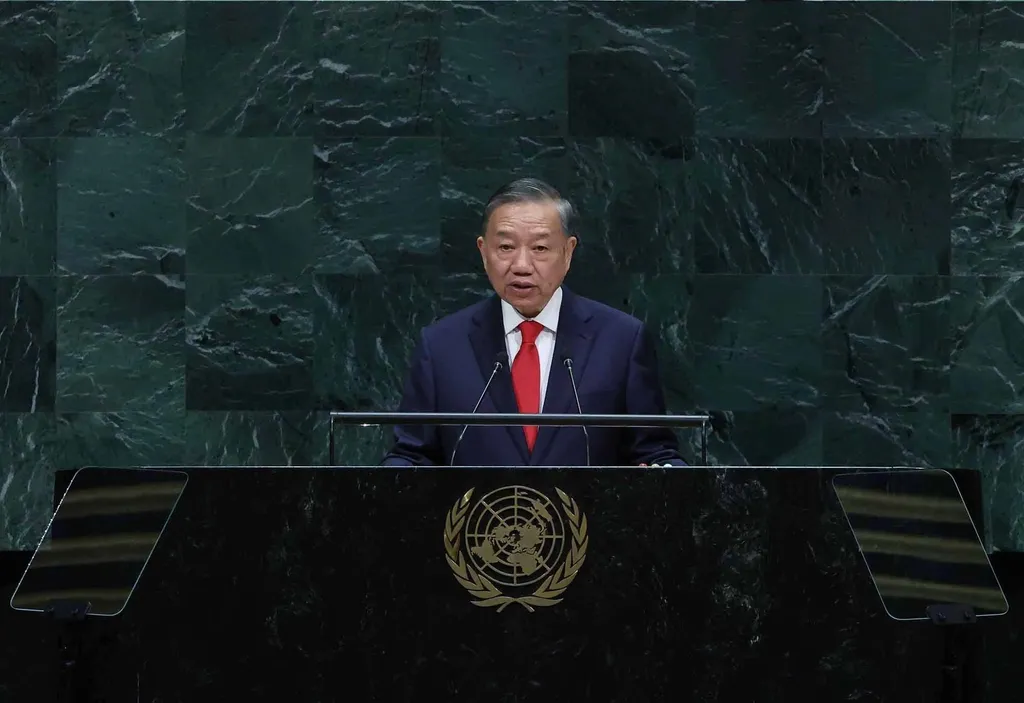
New York, September 23, 2026 — The Europe Today: General Secretary of the Communist Party of Viet Nam Central Committee and President Tô Lâm has proposed four major orientations for managing global change, stressing the need to prevent competition from turning into confrontation, differences from leading to conflict, and technological advancement from creating new divisions.
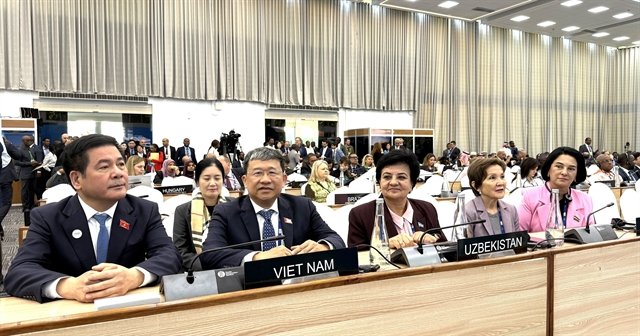
Addressing the high-level general debate of the 81st Session of the United Nations General Assembly (UNGA 81) at the UN headquarters in New York, President Tô Lâm outlined Viet Nam’s perspectives on strengthening international cooperation, promoting sustainable development, governing emerging technologies and reinforcing multilateralism.
The Vietnamese leader’s first priority was restoring trust among nations on the basis of the UN Charter and international law. He stressed that countries should respect each other’s independence, sovereignty, territorial integrity and right to choose their own development paths, while refraining from interference in internal affairs and the unlawful threat or use of force.
He called for responsible management of differences through dialogue, restraint and adherence to international commitments. He also emphasised the responsibility of major powers to respect international law and address common challenges, while underscoring the central role of the United Nations.
Regarding conflicts, President Tô Lâm stressed the need to protect civilians, uphold international humanitarian law and ensure humanitarian access. He reaffirmed Viet Nam’s support for the Palestinian people’s right to self-determination and for a two-state solution under international law and relevant UN resolutions.
Addressing developments in the Asia-Pacific region, he highlighted ASEAN’s nearly six decades of experience in transforming confrontation into dialogue and division into cooperation. He reaffirmed Viet Nam’s position that disputes in the East Sea, internationally known as the South China Sea, should be resolved peacefully in accordance with international law, particularly the 1982 UN Convention on the Law of the Sea (UNCLOS).
The Vietnamese leader also expressed solidarity with the people and government of Cuba and called for an end to unilateral US embargoes and energy blockades against the country, as well as Cuba’s removal from the US list of state sponsors of terrorism.
The second orientation focused on promoting equitable, inclusive and sustainable development. President Tô Lâm called for international commitments, including the Pact for the Future and the 2030 Agenda, to be translated into concrete action.
He advocated expanding developing countries’ access to affordable long-term financing, supporting countries facing heavy debt burdens and strengthening the voice of developing nations in international financial and monetary institutions. He also called for an open, fair and transparent multilateral trading system.
Climate change, he said, should remain a priority in development cooperation, particularly through adaptation finance, technology transfer and a just energy transition. Development should remain people-centred while advancing social equity, environmental protection and the livelihoods of vulnerable communities.
The third orientation concerned the governance of science and technology, digital transformation and artificial intelligence. President Tô Lâm noted that technological progress offers significant opportunities while also presenting new challenges and warned that technological advancement should help narrow development gaps rather than create new forms of dependency or conflict.
He called for inclusive, secure, transparent and responsible governance frameworks that respect national sovereignty, digital sovereignty and the right to autonomous development. He further stressed that developing countries should have meaningful participation in global technology rule-making and equitable access to technological progress.
The Vietnamese leader also highlighted Viet Nam’s contribution to international digital cooperation, including its role in hosting the signing ceremony for the UN Convention against Cybercrime in Hà Nội in 2025. He said Viet Nam was ready to cooperate with international partners in combating cybercrime and supporting green and digital transitions.
The fourth orientation was strengthening multilateralism and the central role of the United Nations. President Tô Lâm said the UN’s strength lies in its ability to build consensus, establish international norms, develop rules and mobilise collective action to address global challenges.
He expressed Viet Nam’s support for UN reform, particularly reforms concerning the General Assembly, Security Council and Secretariat, with the objective of enhancing effectiveness, streamlining structures and strengthening the organisation’s capacity to implement global agendas and safeguard the interests of developing countries.
President Tô Lâm reaffirmed Viet Nam’s foreign policy of independence, self-reliance, peace, friendship, cooperation and development, alongside the diversification and multilateralisation of its external relations.
He said Viet Nam would continue upholding the UN Charter and international law, promoting dialogue and peaceful settlement of disputes and contributing to UN peacekeeping operations. He also highlighted Viet Nam’s commitment to strengthening ASEAN and its preparations to host APEC in 2027.
As a member of the UN Human Rights Council, Viet Nam also supports dialogue and cooperation to promote and protect human rights, while offering to share its experiences in poverty reduction, agricultural development and climate-change adaptation.
Concluding his address, President Tô Lâm reaffirmed that Viet Nam chooses peace, cooperation and development, and pledged that the country would continue working with other nations to strengthen the United Nations, uphold international law and translate international commitments into tangible benefits for people around the world.